The knock came a second time.
Three firm strikes against the hospital door.
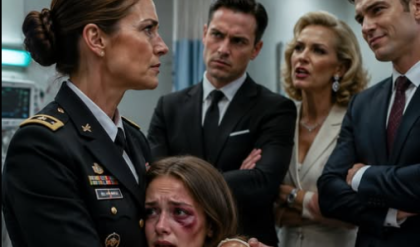
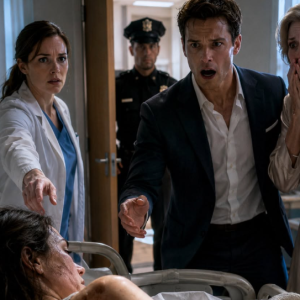
Daniel stared at Dr. Lena Ortiz as though he could intimidate her into taking back what she had just said.
Vivian clutched the edge of a chair, her face pale beneath layers of expensive makeup.
“No one is speaking to detectives,” Daniel said sharply.
“My wife is heavily medicated.
She’s confused, and this doctor clearly has a personal bias.”
Lena did not move.
“You told the emergency physician that Elena dropped a pot of soup on herself,” she said.
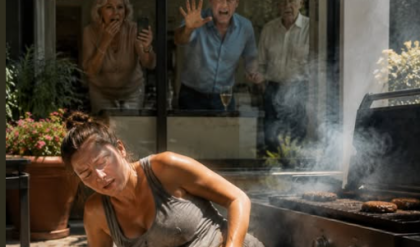
“The burns are consistent with cooking oil thrown from behind.
The camera confirms it.”
Vivian found her voice first.
“That camera is illegal!” she cried.
“She recorded us in our own home without permission!”
“Our home?” I whispered.
Every head turned toward me.
My throat felt raw, and the pain medication made the ceiling sway, but I forced myself to keep my eyes open.
“The house belongs to my trust,” I said.
“You were a guest.”
Daniel rushed to my bedside.
“Elena, sweetheart, you’re in shock.
Don’t say anything until you understand what’s happening.”
Sweetheart.
He had not called me that in years unless someone else was listening.
I looked at the man who had spent three years convincing me that I was difficult, unstable and impossible to love.
He had controlled my money, monitored my calls and turned my own home into a prison.
Now fear trembled beneath his polished expression.
For once, it belonged to him.
The door opened.
Detective Rachel Morgan entered first, followed by another officer and a hospital security guard.
Rachel was in her early forties, with tired eyes and a voice that revealed nothing.
“Daniel Cross?” she asked.
Daniel straightened his jacket as though preparing for a business meeting.
“Yes.
I’m Elena’s husband.
There has clearly been a misunderstanding.”
Rachel glanced toward me.
“Mrs. Cross, are you able to tell me whether you feel safe with either of these people in the room?”
Daniel answered before I could.
“She is sedated.”
Rachel did not look at him.
“I asked your wife.”
I lifted my hand and pointed toward the door.
“I want them gone.”
The words were barely louder than a breath, but they changed everything.
The second officer stepped toward Daniel.
Hospital security moved beside Vivian.
Vivian’s shock hardened into rage.
“You ungrateful little snake,” she hissed.
“After everything my son gave you—”
“Everything he gave me?” I asked.
I turned my head carefully toward her.
“He gave me fear.
You gave me scars.”
Vivian lunged forward.
She made it only one step before the officer caught her arm.
Daniel’s mask finally slipped.
“Mother, stop!”
But Vivian was no longer listening.
“She planned this!” she screamed.
“She wanted to destroy us! She stood there in that kitchen provoking me, staring at me like she was better than us!”
Detective Morgan’s expression sharpened.
“You threw the oil?”
The room went completely still.
Vivian realized what she had said.
Daniel closed his eyes.
“Mother,” he whispered, “don’t say another word.”
Rachel nodded to the officer.
“Separate them.”
As they were escorted into the hallway, Daniel turned toward me.
There was no affection in his face now, only naked fury.
“You have no idea what you’ve done.”
I held his gaze.
“Yes,” I said.
“I do.”
Within forty-eight hours, Vivian was charged with aggravated assault.
Daniel was not arrested immediately, but he soon learned that freedom could become its own kind of interrogation.
The police found the kitchen recording exactly where Lena told them it would be—automatically uploaded to an encrypted server the moment the camera detected violent motion.
The video showed everything.
Vivian lifting the pot.
Her expression before she threw it.
Me collapsing.
Daniel entering the kitchen moments later.
He did not call an ambulance.
He did not check whether I was breathing.
Instead, he looked directly at his mother and said, “We need to make this look accidental.”
Then came the sentence that destroyed whatever remained of his defense.
“Delete the cameras before she wakes up.”
He had stepped over my body, wiped oil from his shoes and spent nearly twelve minutes cleaning the kitchen before finally dialing emergency services.
But the recording was only the beginning.
The hospital activated the instructions stored with my bank.
By the following morning, encrypted files were delivered to the district attorney, my trust attorney and a federal financial crimes investigator.
Daniel had not merely tried to steal my inheritance.
For nearly two years, he had been using forged trust documents to secure private loans.
He created companies in my name, moved borrowed money through accounts controlled by friends and planned to declare the companies bankrupt after transferring the assets overseas.
He believed that once I signed over control of the trust, he could blame every transaction on me.
He had even prepared medical statements claiming I suffered from delusions and memory loss.
The signatures belonged to a physician who had never examined me.
When investigators traced the payments, they discovered that Daniel had paid him through one of the shell companies.
The perfect husband was not simply an abuser.
He was a fraudster who had been preparing to make me the legal owner of his crimes.
Three days after the attack, Daniel sent flowers to my hospital room.
White roses.
My favorite, back when he still pretended to care.
The card read:
We can fix this.
You know what happens if you force me to fight.
I handed it to Detective Morgan without responding.
It became evidence too.
My recovery lasted monThS.
The burns across my back and shoulders required surgery, painful dressing changes and hours of physical therapy.
Some nights, I woke believing I was still on the kitchen floor.
I could smell hot oil where there was none.
I could hear Vivian’s voice in the quiet hum of hospital equipment.
Lena stayed whenever her shifts allowed.
She never asked why I had waited so long to leave.
That was one of the reasons I trusted her.
Instead, one evening, while helping me sit beside the window, she said, “You spent years building a case because building cases was safer than admitting you were trapped.”
I looked down at the city lighTS.
“I thought I could control the ending.”
“You did control it.”
“No,” I said.
“I survived it.
There’s a difference.”
Lena was silent for a moment.
Then she asked, “What do you want now?”
I had prepared answers for detectives, prosecutors and attorneys.
I knew what charges should be filed and which assets should be frozen.
I knew how Daniel’s defense team would attack me and which witnesses could disprove their claims.
But no one had asked me what I wanted.
“I want my life back,” I said.
Lena squeezed my hand.
“Then don’t stop when they go to prison.”
The criminal trial began eleven months later.
By then, my scars had faded from angry red to pale silver.
I wore a cream-colored suit with a high collar, not because I was ashamed of them, but because the courtroom would already contain enough spectacle.
Daniel sat at the defense table in a dark suit.
He still looked handsome.
That was the unsettling thing about men like him.
Cruelty did not always announce itself with wild eyes or clenched fisTS. Sometimes it wore a tailored jacket, donated to hospitals and shook hands with judges at charity dinners.
Vivian sat behind him, awaiting her own separate trial.
Her attorney had advised her not to attend, but she refused to miss the chance to glare at me.
The prosecution began with the kitchen video.
No one spoke while it played.
The jurors watched Vivian throw the oil.
They heard my scream.
They saw Daniel step over me.
One juror covered her mouth.
Another looked away.
Daniel stared down at the table.
When the prosecutor asked me to testify, I walked to the witness stand without looking at either of them.
For three hours, I described the financial control, the isolation and the calculated campaign to portray me as mentally unstable.
I explained why I installed the cameras and how I protected the trust documenTS.
Daniel’s attorney rose for cross-examination.
He was skilled, aggressive and expensive.
 Man Refuses To Let His Ex-Wife Stay At His House, Now His Friends Are Canceling The Vacation
“Mrs. Cross,” he said, “you were once a highly successful fraud attorney, correct?”
“Yes.”
“You understand how to manufacture a narrative.”
“I understand how evidence creates one.”
A few jurors looked toward him.
He walked closer.
“You secretly recorded your husband and his mother.”
“I recorded common areas of a home owned by my trust after property repeatedly disappeared and threats began escalating.”
“You substituted documents without telling your husband.”
“I prevented him from stealing assets he had no legal right to control.”
“You gathered information for months but continued living with him.”
“Yes.”
“Because you were planning revenge?”
“No.”
“Then why didn’t you leave?”
The question landed exactly as he intended.
It carried accusation disguised as curiosity.
Why didn’t you leave?
Why did you stay?
Why did you wait until your body was burned before speaking?
I looked toward the jury.
“Because abuse does not begin with boiling oil,” I said.
“It begins with one insult you forgive.
One password you surrender.
One friend you stop calling because your husband dislikes her.
One bank account you no longer control.
One argument where he tells everyone you misunderstood what happened.”
The attorney opened his mouth, but I continued.
“By the time you realize you are trapped, the person hurting you has already spent years convincing you that no one will believe you.
I did not stay because I wanted revenge.
I stayed because I was afraid.
Then I gathered evidence because evidence was the only language I still trusted.”
The courtroom was silent.
Even Vivian lowered her eyes.
Daniel’s attorney changed direction.
“You expect this jury to believe you were afraid of my client, yet you secretly outmaneuvered him financially?”
I faced Daniel for the first time.
“Being afraid of someone does not mean you are less intelligent than they are.”
Daniel’s jaw tightened.
“It means you know exactly what they are capable of.”
The prosecutor’s final witness was Dr. Lena Ortiz.
She testified about my injuries, Daniel’s false statements and the difference between an accidental spill and oil thrown with force.
Then she revealed something even I had not known.
While I was unconscious, Daniel had attempted to pressure a nurse into increasing my sedative dosage.
He claimed I became violent when awake.
The nurse refused and documented the request.
Security footage showed Daniel later entering a restricted medication area using a stolen staff badge.
He had not gone far enough to reach my room with anything, but the prosecution did not need to prove what he intended.
The jury understood.
Daniel was no longer charged only with fraud, conspiracy, evidence tampering and obstruction.
He was also charged with attempting to interfere with a witness.
Me.
After six days of testimony, the jury deliberated for less than four hours.
Guilty on every major count.
Daniel showed no emotion until the judge revoked his bail.
Then he turned toward me.
“Elena!”
The deputies grabbed his arms.
“You did this to me!”
I stood slowly.
“No,” I said.
“I stopped you from doing it to anyone else.”
He received twenty-three years in federal and state custody, with additional sentences running concurrently.
Vivian’s trial ended three months later.
Her attorneys argued that years of stress had caused a temporary break from reality.
The prosecution played her words from the hospital.
She stood there provoking me.
The jury convicted her of aggravated assault and conspiracy to conceal evidence.
At sentencing, Vivian asked to speak.
She stood in an orange uniform, thinner than I remembered, her gray hair pulled away from her face.
“Elena destroyed my son,” she said.
“She came into our family and turned him against me.
Everything I did was to protect him.”
The judge leaned forward.
“You threw boiling oil across another human being because dinner was late.”
Vivian’s lips trembled.
“She was never good enough for him.”
The judge’s voice hardened.
“This court disagrees.
Your son was never good enough for her.”
Vivian was sentenced to twelve years.
When the courthouse doors closed behind me, reporters shouted questions from the steps.
Did victory feel good?
Was I satisfied?
Did I forgive them?
I did not answer.
Victory was not the word for waking every night in terror.
Satisfaction did not describe skin grafts or the smell of antiseptic.
And forgiveness was not something strangers were entitled to demand from me.
I returned home alone.
Not to the house where it happened.
I sold that property and donated the entire kitchen to a fire-safety training program before the building was renovated.
I bought a smaller home near the water, with wide windows, pale wooden floors and a garden I did not know how to care for.
For weeks, I kept expecting someone to criticize how I folded towels or arranged dishes.
No one did.
The silence was frightening at first.
Then it became peaceful.
I returned to law, but not to the corporate fraud cases that once made my name.
Using recovered assets from Daniel’s schemes, I opened the Hale Justice Foundation, providing legal representation and emergency housing for people trapped in financially controlling relationships.
The first client who sat across from me was a young mother named Maya.
Her husband had taken her identification, emptied her bank account and told everyone she was unstable.
She spoke so quietly that I had to lean forward to hear her.
“I know this sounds stupid,” she said.
“He’s never broken a bone.
Maybe it isn’t serious enough.”
I looked at her trembling hands.
“It is serious enough because you are afraid.”
Tears filled her eyes.
“No one has said that before.”
I opened a clean folder and placed it between us.
“Then let’s make sure you never have to prove it alone.”
Two years after the trial, Lena and I stood in the foundation’s new office during its opening ceremony.
Sunlight poured through the windows.
Survivors, attorneys, counselors and volunteers filled the room.
A photograph of my father hung near the entrance.
Beneath it was a sentence he had often repeated when teaching me the law:
Power is not what you can take from people.
Power is what you can protect for them.
Lena handed me a pair of scissors for the ribbon.
“You ready?” she asked.
I looked around the room.
At the locked file cabinets filled with active cases.
At the emergency phones waiting to be distributed.
At the wall covered in handwritten notes from people who had found housing, regained custody of children or opened bank accounts in their own names.
For years, I believed my story would end when Daniel and Vivian were punished.
I was wrong.
Their punishment was only the end of their control.
My life began afterward.
I cut the ribbon.
The room erupted in applause.
Later, when everyone had gone, I stood alone beside the window.
My scars tightened whenever I moved too quickly, and some nights still carried memories I could not silence.
But pain was no longer the strongest thing I felt.
A woman had walked into the foundation that morning carrying a suitcase and her seven-year-old daughter.
She had nowhere safe to sleep.
That evening, they were eating dinner inside a secure apartment Daniel’s recovered money had helped purchase.
His greed had become their shelter.
Vivian’s cruelty had become evidence used to train doctors and investigators.
The lie they created to bury me had become the truth that freed hundreds of others.
I reached behind my shoulder and touched the edge of the scar beneath my blouse.
Once, I thought it marked the night they nearly destroyed me.
Now I understood what it truly represented.
It was the place where their power ended.
And mine began.