
The Envelope That Changed Everything
Mara Lane placed the sealed envelope on the table in front of her.
For several seconds, no one moved.
The courtroom had been filled with the sound of Adrian Hollis’s success for the last half hour—his company, his income, his house, his carefully arranged life.
Now, for the first time that morning, everyone was looking at something that did not belong to him.

Judge Calder glanced at the envelope.
“Mrs. Lane, what is contained inside?”
Mara looked toward him calmly.
“Documents that explain why my husband believes I have no financial stability, Your Honor.”
Russell Crane, Adrian’s attorney, immediately stood.
“Your Honor, unless those documents were properly disclosed during discovery, we object to introducing new evidence at this stage.”
Judge Calder raised a hand.
“Sit down, Mr. Crane.
I will determine what is relevant.”
Russell slowly sat.
Adrian leaned toward Paige and whispered something.
Paige smiled.
They were still confident.
Because they knew what the public knew.
They knew the version of Mara Lane they had created.
A quiet wife.
A stay-at-home mother.
A woman who had stepped away while Adrian built an empire.
But they did not know the woman who had been sitting silently behind the scenes for twelve years.
They did not know what was inside that envelope.
Mara opened it carefully.
The first document she removed was not a bank statement.
It was a company ownership certificate.
Several people in the courtroom leaned forward.
Judge Calder adjusted his glasses.
“Explain this.”
Mara placed the document where the judge could see it.
“Before Hollis Transit Systems became the company everyone recognizes today, it was called Lane Logistics Consulting.”
Adrian’s face changed.
Only slightly.
But Mara noticed.
She continued.
“My father founded the company thirty years ago.
After his death, I inherited full ownership.
When Adrian and I married, he joined the company as an operations manager.”
Russell immediately interrupted.
“That is misleading.
Mr. Hollis transformed the company.
He expanded it nationally.”
Mara turned toward him.
“Yes.
He expanded it.”
A pause.
“But he expanded something that already existed.”
The courtroom became silent.
Mara placed another document on the table.
“This is the original incorporation agreement.”
Judge Calder looked at the first page.
Then he stopped.
His expression changed.
At the top of the document was a name.
Mara Elizabeth Lane.
The judge looked up.
“Mrs. Lane, are you stating that you were the original owner of Hollis Transit Systems?”
“I am stating that Hollis Transit Systems exists today because I allowed my husband to become the public face of a company that belonged to me.”
A wave of whispers moved through the courtroom.
Adrian’s relaxed expression disappeared.
“That is ridiculous.”
His voice was louder than he intended.
Judge Calder looked at him.
“Mr. Hollis, you will have an opportunity to speak.”
Adrian lowered his voice, but his anger was visible.
“She is twisting history.”
Mara looked at him for the first time.
“No, Adrian.
I am finally telling it.”
Twelve years earlier, Mara had never wanted fame.
When she inherited her father’s transportation company, she was twenty-eight years old, newly married, and pregnant with the twins.
Adrian had been ambitious.
He had ideas.
He had confidence.
And he had convinced her that he could help take her father’s small regional company into something much larger.
Mara believed him.
She trusted him.
So she did something most people never knew.
She gave him a chance.
She transferred operational control to him.
Not ownership.
Control.
There was a difference.
For years, she worked behind the scenes.
She negotiated contracTS.
She designed expansion strategies.
She built relationships with investors.
She spent nights reviewing financial reports while taking care of newborn twins.
But every newspaper article called Adrian a visionary.
Every interview praised his leadership.
Every award ceremony celebrated his achievement.
And Mara smiled beside him.
Because she thought marriage meant building together.
She never imagined the man beside her would eventually try to erase her completely.
Judge Calder continued reviewing the documenTS.
“According to this agreement, Mrs. Lane retained controlling ownership through a family trust.”
“Yes, Your Honor.”
“And this trust was created before your marriage?”
“Yes.”
Russell looked uncomfortable.
He flipped through his own binder.
“This cannot be correct.”
Judge Calder looked at him.
“You are telling the court you did not know the ownership structure of your own client’s company?”
Russell did not answer.
That silence said enough.
Mara removed another document.
“This is the prenuptial agreement Mr. Crane mentioned earlier.”
Adrian smiled again.
Finally.
Something he understood.
“The prenup proves exactly what we said.
She receives only what was hers, and I keep what was mine.”
Mara nodded.
“Yes.”
Then she looked at him.
“That is exactly why you lost.”
The smile disappeared.
Judge Calder frowned.
“Explain.”
Mara opened the document.
“The prenuptial agreement states that each spouse retains separate ownership of premarital asseTS. It also states that business ownership remains with the original owner unless transferred through a separate agreement.”
The judge looked carefully.
Mara continued.
“Adrian never purchased the company.
He never received ownership shares.
He never contributed personal capital to acquire it.”
She turned another page.
“He was an employee who later became president of a company he did not own.”
The courtroom went completely silent.
Paige stared at Adrian.
“Is that true?”
For the first time that morning, Adrian looked nervous.
“Paige, not now.”
But she had already heard enough.
The woman sitting beside him—the woman he planned to marry—was realizing she had been standing beside a man whose greatest achievement might not belong to him.
Russell stood.
“Your Honor, even if Mrs. Lane owns the company, that does not determine custody.”
Judge Calder nodded.
“Correct.”
Russell relaxed slightly.
He thought he had found his opening.
“The custody decision should focus on the children’s best interesTS. Mr. Hollis has financial resources, stability, and a superior home environment.”
Mara looked down at her sons.
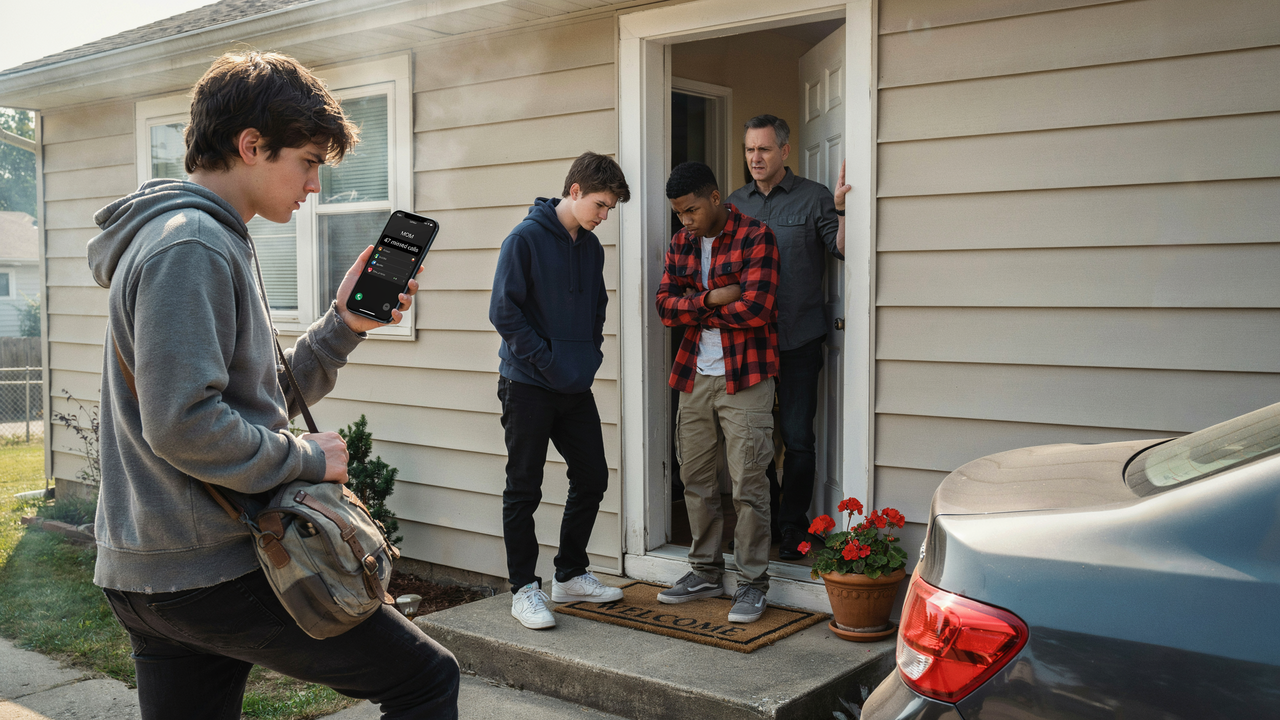 Mom Freaks Out After Dad Sends Stepbrothers Away — She’s Been Trying To Force Them On Man For Years
Then she looked back at the judge.
“Your Honor, I agree completely.”
Everyone looked surprised.
She continued.
“Money should never decide whether a parent deserves custody.”
She walked toward the table and placed another folder down.
“This is my actual financial record.”
Inside were years of transfers.
School paymenTS.
Medical expenses.
Investment records.
Charitable donations.
And one more document.
A letter from the twins’ school.
Judge Calder read it.
His expression softened.
“What is this?”
Mara answered quietly.
“It is from the boys’ teachers.”
The judge read the first line.
Then another.
Then another.
The letters described Samuel and Owen’s daily life.
Their mother attending every parent meeting.
Helping with homework.
Volunteering at school.
Sitting beside them during difficult momenTS.
Adrian’s attorney had described Mara as absent.
The teachers described her as the parent who was always there.
Judge Calder looked toward Adrian.
“Mr. Hollis, how often do you personally attend school meetings?”
Adrian hesitated.
“I have a demanding schedule.”
“That was not my question.”
A long pause.
“Not often.”
“How often do you handle medical appointments?”
Adrian looked away.
“Mara usually handles those.”
The judge leaned back.
“So the parent you claim is incapable of raising these children is the parent who has been raising them.”
No one spoke.
Then Samuel, the older-looking twin because of his glasses, quietly raised his hand.
The court officer looked at Judge Calder.
The judge nodded.
“What is it, young man?”
Samuel stood.
“I don’t want to choose between my parenTS.”
His voice was small.
“But I want to say something.”
Judge Calder softened.
“You may.”
Samuel looked at his father.
“Dad told us Mom would have nothing after the divorce.”
Adrian immediately looked uncomfortable.
Samuel continued.
“He said we would live with him because he could give us a better life.”
Owen looked down.
“He told us Mom would probably lose the house and need help.”
Mara closed her eyes briefly.
Not because she was surprised.
Because it hurt.
Judge Calder looked at Adrian.
“Did you say these things to your children?”
Adrian opened his mouth.
Nothing came out.
For once, he had no prepared answer.
The hearing lasted another two hours.
By the end, the story everyone believed that morning had completely collapsed.
The judge reviewed the evidence.
The company ownership documenTS.
The financial records.
The testimony.
The children’s statemenTS.
Finally, he removed his glasses.
“Mr. Hollis, this court has seen many divorces where one spouse attempts to control the narrative by controlling the resources.”
He paused.
“But wealth does not equal parenting ability.”
Adrian sat completely still.
Judge Calder continued.
“Mrs. Lane has demonstrated stability, involvement, and a commitment to protecting her children from adult conflict.”
He looked toward both parenTS.
“Joint legal custody will be awarded.
Primary physical custody will remain with Mrs. Lane.”
Adrian’s face turned pale.
“But the company—”
The judge interrupted.
“The company ownership dispute is a separate matter.
However, based on the documents presented today, this court finds no evidence that you possess the ownership interest you claimed.”
The room erupted into whispers.
Adrian looked at Russell.
His attorney looked away.
Outside the courtroom, reporters waited.
They wanted the story of Adrian Hollis, the successful businessman, defeating his wife.
But the story they received was different.
Mara walked out holding Samuel and Owen’s hands.
She did not celebrate.
She did not insult Adrian.
She simply walked.
A reporter asked her:
“Mrs. Lane, after everything that happened today, what do you want people to know?”
Mara stopped.
She looked back at the courthouse.
Then at her sons.
“I want people to understand something.”
“Being invisible does not mean being powerless.”
The reporter waited.
Mara continued.
“Sometimes the person standing quietly beside someone else is the reason they are standing at all.”
Three months later, Hollis Transit Systems changed forever.
The board removed Adrian from his position after an internal investigation revealed years of misleading public statements about ownership.
The company returned to its original structure.
Lane Holdings.
Mara never became the public celebrity Adrian had been.
She did not want to.
She returned to what she had always done.
Building.
Leading.
Protecting.
Her sons grew up knowing the truth.
Not that their mother defeated their father.
But that their mother never needed to destroy anyone to prove her worth.
Years later, when Samuel graduated from college, he gave a speech.
He thanked his teachers.
He thanked his friends.
Then he looked toward his mother sitting in the front row.
“My mother taught me the most important lesson of my life.”
“The world may misunderstand you for years.”
“But truth does not need permission to exist.”
Mara smiled.
Because after twelve years of silence, everyone finally understood what Adrian never did.
He thought he owned the company.
He thought he owned the story.
He thought he had already won.
But the truth had been waiting quietly in the original file all along.
And the name at the top had never been his.