“Are you Caroline Voss from the file?”
The room became so still that I could hear the refrigerator humming behind me.
Diane’s smile remained in place, but it no longer looked natural.
It looked painted onto her face.
Marcus stared at Priscilla.
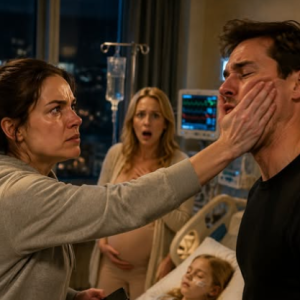
“What file?” he asked.
His voice was too quick.
Too sharp.
Priscilla did not answer him.
She kept her eyes on me.
“Caroline Elise Voss?” she asked.
“Formerly with Voss Environmental Engineering?”
I folded my hands in front of me.
“Yes.”
Marcus gave a nervous laugh.
“There must be some mistake.
Caroline hasn’t worked in engineering for years.”
“That’s not true,” I said.
Every face turned toward me.
Marcus blinked.
I continued calmly.
“I haven’t worked for your company in years.”
Diane’s fingers tightened around the stem of her wineglass.
Priscilla’s expression changed again.
The recognition in her face deepened into something heavier.
Understanding.
She opened her handbag, removed her phone, and looked at the screen as if confirming something she already knew.
Marcus stepped toward her.
“Priscilla, what is going on?”
She held up one hand.
He stopped.
It was the first time I had ever seen Marcus Hartwell obey a woman without trying to charm her first.
Priscilla looked at me.
“My legal team sent me an emergency due-diligence report this afternoon,” she said.
“Your name appears throughout it.”
Diane’s voice turned thin.
“Due diligence for what?”
Priscilla finally looked at her.
“For the acquisition.”
The color drained from Diane’s face.
Marcus’s jaw tightened.
“That’s confidential.”
“So is a hidden environmental liability,” Priscilla replied.
“So is falsified ownership documentation.
So are undeclared marital asseTS. Yet apparently your family has a flexible definition of confidentiality.”
I watched Marcus’s eyes move rapidly.
First to Priscilla.
Then to me.
Then toward the hallway leading to his father’s study.
He was calculating.
He always calculated when he was frightened.
He had done it when our mortgage payment was late during the first year of our marriage.
He had done it when his father threatened to remove him from the company.
He had done it whenever the truth entered a room before he had prepared a lie.
“Caroline,” he said, lowering his voice, “what have you done?”
I almost smiled.
Not because the question was funny.
Because it was so familiar.
Marcus could betray me for months, introduce his mistress to his mother, bring her into the same room where I had served Thanksgiving dinner for eleven years—and still, when consequences arrived, his first instinct was to ask what I had done.
“I made sure the truth had a mailing address,” I said.
Diane set down her glass hard enough for wine to splash over the rim.
“You will not speak in riddles in my home.”
I looked around the gleaming kitchen.
At the polished marble.
At the expensive appliances.
At the flower arrangement Diane replaced every four days.
Then I looked back at her.
“That is an interesting choice of words.”
Her eyes narrowed.
“My home.”
Before she could respond, the front door opened again.
This time no one smiled.
A man in a charcoal suit entered carrying a leather portfolio.
Behind him came a woman with silver-streaked hair, a dark red jacket, and the unmistakable posture of someone who had spent decades watching powerful people lie under oath.
Marcus took one step backward.
I recognized that step.
It was the physical equivalent of panic.
The man closed the front door.
“Mrs. Voss,” he said to me.
“I apologize for the timing.
Traffic from downtown Phoenix was heavier than expected.”
“You know these people?” Marcus demanded.
“Yes,” I said.
The woman in red extended her hand to me.
“Caroline, good to see you again.”
Diane’s mouth opened.
No sound came out.
I shook the woman’s hand.
“This is Elena Ruiz,” I said.
“My attorney.”
Elena looked toward Marcus.
“And this is David Lin, forensic accountant.”
David gave a brief nod.
Marcus laughed again, but there was no confidence in it.
“This is absurd.
You brought an attorney and an accountant to my mother’s dinner?”
“No,” Elena said.
“Mrs. Voss invited us to a scheduled disclosure meeting at a property in which she holds a documented legal interest.”
Diane’s face hardened.
“She holds no interest in this house.”
David opened his portfolio.
“Actually, Mrs. Hartwell, that is one of several matters we are here to address.”
Diane gripped the edge of the counter.
“Get out.”
Elena did not move.
“Before you make that request again, you should know that copies of the relevant records have already been delivered to the Maricopa County Recorder’s Office, the Arizona Corporation Commission, three financial institutions, and counsel representing Adair Capital.”
Priscilla’s gaze shifted toward Marcus.
“You knew about this meeting?”
“No.”
He answered too quickly again.
Priscilla turned to me.
“Did he know about the investigation?”
“He knew enough to hide the second phone,” I replied.
Marcus’s face went pale.
Diane looked from him to me.
“What second phone?”
For the first time that evening, Marcus looked genuinely angry.
Not embarrassed.
Not worried.
Angry.
“You went through my things?”
“No,” I said.
“You left it in the laundry room inside the pocket of the navy jacket you asked me to take to the cleaner.”
“You had no right.”
“I didn’t unlock it.”
He hesitated.
That was the mistake.
Everyone saw it.
I continued.
“It lit up while I was holding it.
The message preview said, ‘Once Priscilla signs, your wife gets nothing.’”
Priscilla’s expression sharpened.
“Who sent that?”
Marcus said nothing.
I answered for him.
“His father.”
A voice came from the hallway.
“You have always had a flair for drama, Caroline.”
Arthur Hartwell stepped into the kitchen.
At seventy-one, Marcus’s father still carried himself like a man who expected rooms to reorganize around him.
He wore a dark blazer despite the warmth, silver hair combed neatly away from his forehead, his expression composed.
Only his left hand betrayed him.
It was trembling.
He tucked it into his pocket.
Diane moved toward him.
“Arthur, do something.”
He ignored her.
His eyes settled on Elena.
“Ms.
Ruiz.”
“Mr. Hartwell.”
“You should advise your client to leave before she makes accusations she cannot support.”
Elena smiled without warmth.
“I advised my client to document everything.
She did.”
Arthur looked at me.
For years, that look had reduced me to silence.
At holiday dinners.
At company evenTS.
At the hospital when Marcus had surgery and Arthur told the nurse that I was “only the wife” and he would make the decisions.
But something had changed.
Maybe it was the legal folder in David’s hand.
Maybe it was Priscilla’s presence.
Maybe it was simply that I had finally stopped asking the Hartwells to recognize my worth.
Arthur’s stare no longer felt like a verdict.
It felt like noise.
“You were welcomed into this family,” he said.
“No,” I replied.
“I was used by this family.”
Diane gasped.
Marcus moved closer to me.
“Caroline, stop.”
I turned toward him.
“You stood in this room and asked me not to make your affair uncomfortable.”
He looked at the floor for half a second.
“I never said Priscilla and I—”
“Don’t,” Priscilla interrupted.
Marcus turned.
She stepped away from him.
“Do not make me part of another lie.”
His voice softened.
“Priscilla, you know what we have.”
“I know what you told me.”
“And what did he tell you?” I asked.
Priscilla’s eyes met mine.
“That you were separated.”
Diane looked at Marcus.
He did not look back.
Priscilla continued.
“He said you had been living as strangers for two years.
He said you refused to sign the divorce because you wanted part of Hartwell Development.”
I nodded slowly.
“Did he mention that I had not been offered divorce papers?”
“No.”
“Did he mention that we slept in the same bedroom until six weeks ago?”
Priscilla’s lips parted.
Marcus raised his hands.
“This is not the place.”
“It became the place when your mother invited your girlfriend to dinner and told your wife to behave,” Elena said.
Arthur’s voice cut through the room.
“Enough.
Whatever personal failures occurred between Caroline and Marcus are irrelevant to the business.”
David looked down at the documents in his portfolio.
“They are very relevant to the business.”
Arthur’s trembling hand emerged from his pocket.
He pointed toward David.
“You have no authority here.”
David removed a thick folder and placed it on the counter beside my casserole.
The contrast almost made me laugh.
Eleven years of my life sat between a baking dish and a forensic accounting report.
“Authority is not the issue,” David said.
“Ownership is.”
Diane’s face tightened.
Arthur looked at me.
“What did you give them?”
I thought about the first time I met him.
Marcus and I had been dating for eight monThS. He brought me to a charity dinner at a resort in Paradise Valley.
Arthur asked about my work.
At the time, I was twenty-eight and proud of the small environmental consulting company my mother had founded.
I explained that Voss Environmental Engineering performed land studies, groundwater analysis, remediation planning, and compliance reviews.
Arthur had smiled.
“A useful little business.”
I should have understood the warning hidden inside the word little.
Two years later, after my mother died, I inherited the company’s remaining contracts, intellectual property, and a minority interest in several land parcels she had acquired as part of long-term remediation projecTS.
Marcus said he wanted to help me.
He suggested merging some of my company’s operations with Hartwell Development.
He said the family’s resources could preserve my mother’s legacy.
I was grieving.
I was in love.
And love, when placed in the wrong hands, can become a signature machine.
“I gave them records,” I said.
“Original records.”
Arthur’s eyes flickered.
“From where?”
“My mother’s storage unit.”
His face changed for less than a second.
But I saw it.
So did Elena.
So did Priscilla.
Marcus looked at his father.
“What storage unit?”
Arthur did not answer.
I did.
“The one your father told me had been emptied after the merger.”
Diane shook her head.
“This is ridiculous.”
“No,” I said.
“What was ridiculous was believing that all of my mother’s original records had disappeared in a warehouse flood that never happened.”
Marcus stared at Arthur.
“Dad?”
Arthur’s voice remained controlled.
“Old files are often miscatalogued.
Caroline is confused.”
“I was confused,” I said.
“For years.”
I walked to the kitchen table and rested one hand on the back of a chair.
“After my mother died, I could barely read a grocery list without crying.
Marcus handled the merger paperwork.
Arthur brought in the attorneys.
Diane told me I should be grateful the family was protecting me.”
“We were protecting you,” Diane insisted.
“You transferred Voss Environmental’s assets into three Hartwell subsidiaries.”
Arthur’s expression did not move.
“That was part of the merger.”
“No.
The agreement transferred operating contracTS. It did not transfer my mother’s land interests, her remediation patents, or the indemnity rights connected to the Mesa Verde site.”
Priscilla drew in a slow breath.
“The Mesa Verde site,” she repeated.
David glanced at her.
“You’ve seen the liability estimate?”
“My attorneys sent a preliminary summary.”
Marcus looked between them.
“What liability estimate?”
Priscilla’s voice was cold.
“The one connected to forty-two acres your family is trying to sell to my company.”
Diane pressed one hand to her chest.
“We are not selling anything.”
Arthur looked at her.
That single look silenced her.
Marcus turned toward his father.
“You told me Adair Capital was investing.”
“They were,” Priscilla said.
“According to the proposal, Adair Capital would acquire a controlling interest in Hartwell Development’s Southwest portfolio.”
Marcus’s face tightened.
“A controlling interest?”
Priscilla nodded.
“You said you knew.”
He turned toward Arthur.
“You said she was funding the expansion.”
Arthur’s expression finally cracked.
Only slightly.
“Marcus, this is not the time.”
“No, I think it is exactly the time,” Priscilla said.
“Because you presented your son as the future chief executive of the combined operation.
You presented me as a personal partner and a financial partner.
Yet your due-diligence materials omitted both the ownership dispute and the contamination risk.”
Marcus stared at his father.
“You were selling the company?”
“I was restructuring.”
“You were selling control.”
“I was preserving what remains.”
The words slipped out before Arthur could stop them.
Silence followed.
Diane looked at him.
“What remains?”
Arthur closed his eyes briefly.
When he opened them, he looked older.
David pulled out several pages.
“Hartwell Development has been losing money for thirty-one months,” he said.
“The company concealed loan defaults through intercompany transfers, overstated the value of undeveloped land, and pledged disputed property as collateral.”
Marcus stepped toward the folder.
“That’s impossible.”
David turned a page around.
“Here are the loan schedules.”
Marcus scanned the numbers.
His face lost what little color remained.
Diane shook her head repeatedly.
“No.
Arthur would have told me.”
I looked at her.
There was a strange sadness in seeing the truth reach Diane.
Not because she had been kind to me.
She had not.
But because, in that moment, I realized she had built her entire identity around being protected by a powerful man who had never considered her worthy of the truth.
Arthur had not only deceived me.
He had deceived everyone.
The difference was that Diane had helped him do it.
Marcus looked up from the documenTS.
“You used my personal relationship to secure the deal.”
Arthur’s jaw tightened.
“You were incapable of securing anything on your own.”
The sentence landed harder than a shout.
Marcus froze.
For years, he had chased Arthur’s approval with the desperation of a child running after a car that never stopped.
He married the kind of woman Arthur considered useful.
He joined the family company.
He wore the right suiTS.
He learned the right handshakes.
He laughed at his father’s insults as if they were jokes.
And Arthur had just stripped away the illusion in front of everyone.
Priscilla looked at Marcus.
“Was that why you approached me?”
“No.”
“Did your father encourage the relationship?”
Marcus hesitated.
Priscilla’s eyes hardened.
“Answer me.”
“He introduced us.”
“That is not what I asked.”
Marcus dragged one hand over his face.
“He said you were interested in the Scottsdale arts foundation.
He suggested I invite you to the museum benefit.”
“And after that?”
“He said Adair Capital could save the company.”
Diane whispered his name.
“Marcus.”
He ignored her.
Priscilla removed the diamond bracelet from her wrist.
Not dramatically.
Quietly.
She placed it on the counter.
I recognized it.
Marcus had shown it to me online two months earlier and asked whether I thought it would be an appropriate gift for an “important client.”
At the time, I told him it was beautiful.
He bought it using money from our joint account.
Priscilla looked at me.
“Did he purchase this with marital funds?”
“Yes,” I said.
“The charge was made on April ninth.”
Marcus looked stunned.
“How do you know the date?”
“Because I have eleven years of statemenTS.”
His mouth tightened.
“You were monitoring me.”
“I was reading accounts with my name on them.”
Priscilla pushed the bracelet toward him.
“You can return it.”
Marcus did not touch it.
Arthur stepped forward.
“This has gone far enough.
Priscilla, whatever mistakes were made in the disclosure process can be corrected.
There is no reason to destroy a profitable transaction over a domestic disagreement.”
She stared at him.
“A domestic disagreement?”
Her voice was low now.
Dangerously low.
“You attempted to use your son’s affair with me to influence a nine-figure acquisition while hiding material liabilities.
You misrepresented your ownership position.
You omitted pending claims.
And you invited the lawful owner of disputed assets to dinner as if she were household staff.”
Diane’s cheeks burned red.
“She is not the lawful owner of anything that belongs to us.”
Elena opened her folder.
“Mrs. Hartwell, would you like to see the deed?”
The word deed changed the temperature in the room.
Arthur looked directly at Elena.
“Which deed?”
“The original deed for this property.”
Diane laughed, but the sound broke halfway through.
“This house has belonged to the Hartwells for twenty-three years.”
“The residence was purchased by Hartwell Holdings,” Elena said.
“But the land beneath it was part of a larger parcel held by Voss Land Restoration Trust.”
I watched Diane’s hand move slowly toward the counter.
She needed support.
Elena continued.
“The trust was created by Caroline’s mother before her death.
Under the agreement, Hartwell Holdings received residential use rights in exchange for funding restoration work on two contaminated parcels.”
Arthur’s eyes remained fixed on her.
“The use rights were converted.”
“No,” Elena said.
“You filed a conversion document.”
She withdrew another page.
“The signature attributed to Caroline was notarized on a date when she was hospitalized following an emergency appendectomy.”
Marcus looked at me.
I remembered that hospital stay.
Diane had brought me flowers.
Arthur had sent an assistant with forms, saying they were related to health insurance and temporary business authority.
I had been sedated.
I had trusted my husband to read them.
“I signed papers in the hospital,” I said.
Elena nodded.
“You signed a limited medical and business authorization.
You did not sign the deed transfer filed eleven days later.”
Arthur’s voice turned hard.
“Be careful.”
Elena did not blink.
“I am very careful.”
David slid a copy across the counter.
“The notary stamp belongs to a commission that had expired seven months earlier.”
Diane picked up the document with both hands.
She stared at it as though the words might rearrange themselves if she waited long enough.
“This cannot be right.”
“It isn’t,” I said.
“That is the point.”
Marcus looked at Arthur.
“Did you forge her signature?”
Arthur said nothing.
“Dad.”
“I protected the company.”
“You forged my wife’s signature?”
Arthur slammed his palm against the counter.
“I protected everything you have!”
The casserole dish rattled.
Diane flinched.
Arthur pointed toward Marcus.
“You think the cars, the vacations, the club membership, the house in Flagstaff, the office with your name on the door—all of it appeared because you deserved it? I built a system.
I made decisions.
I carried people who would have collapsed without me.”
His eyes shifted to me.
“Her mother’s company was failing.”
“My mother’s company had no debt,” I replied.
“It had no scale.”
“It owned technology you used in twelve developmenTS.”
Arthur’s jaw flexed.
“And we commercialized it.”
“You stole it.”
“We made it valuable.”
“No.
It was already valuable.
You simply convinced me that I wasn’t.”
That silenced him.
For a moment, the anger left Arthur’s face.
What replaced it was almost admiration.
Not affection.
Never that.
But recognition.
At last, he understood that the quiet woman in his kitchen had learned his language.
DocumenTS.
Ownership.
Timing.
Leverage.
He looked toward Elena.
“What does she want?”
Marcus turned toward me.
I could feel everyone waiting for my answer.
Diane probably expected me to demand the Scottsdale house.
Marcus probably expected money.
Arthur expected negotiation because men like Arthur believed every human wound could be converted into a figure on a page.
But I had spent months deciding what I wanted.
At first, I wanted Marcus to apologize.
Then I wanted him to suffer.
Then I wanted Diane to feel the humiliation she had fed me in small portions for eleven years.
But anger is exhausting when you carry it long enough.
Eventually, I wanted something simpler.
I wanted my life back.
“I want the fraudulent transfers reversed,” I said.
“I want the Voss patents, land interests, and remediation rights returned to the trust.
I want a full accounting of every dollar earned from them.”
Arthur gave a humorless smile.
“You’ll bankrupt the company.”
“No,” David said.
“The company did that by borrowing against assets it did not own.”
I continued.
“I want my name removed from every guarantee Marcus signed without explaining what it was.
I want the joint accounts frozen until the marital assets are reviewed.”
Marcus stared at me.
“You froze our accounts?”
“Temporary protective orders were entered at four-fifteen this afternoon,” Elena said.
His head snapped toward her.
“You went to court?”
“Yes.”
“Without telling me?”
“That is generally how emergency orders work.”
Diane’s voice rose.
“You cannot humiliate us like this.”
I looked at her.
“I haven’t said a word to your guests, your neighbors, or your social circle.
I haven’t posted anything.
I haven’t called the newspapers.
Every person in this room is here because your family invited them or because the law required them.”
Priscilla’s mouth tightened.
“She is right.”
Diane looked at her with open resentment.
“You have no place judging this family.”
Priscilla picked up her handbag.
“You invited me to dinner because you thought my money gave me a place.”
Diane had no answer.
Priscilla turned to me.
“When did you discover my name?”
“Six weeks ago.”
“And you knew I was coming tonight?”
“Marcus’s phone showed a message from Diane confirming it.”
“You could have contacted me earlier.”
“Yes.”
“Why didn’t you?”
Marcus looked at me too.
It was a fair question.
I glanced toward the windows, where the Arizona sky had darkened from gold to violet.
“Because at first, I didn’t know whether you were involved in the fraud,” I said.
“I only knew you were involved with my husband.”
Priscilla absorbed that without flinching.
“Then three days ago,” I continued, “your attorney requested historical environmental data from a former Voss consultant.
That told us your company was conducting real due diligence.”
David nodded.
“We sent the file through counsel this morning.”
Priscilla looked at him.
“My team received it at two-twenty.”
“And you still came,” Marcus said.
She turned slowly toward him.
“Yes.”
“Why?”
“To see whether the report was true.”
Marcus’s voice cracked.
“You could have asked me.”
“I did ask you.”
“When?”
“Last night.
I asked whether there were any unresolved ownership claims connected to the Southwest portfolio.”
Marcus closed his eyes.
I remembered hearing that phone call from the hallway.
His voice had been gentle.
Reassuring.
He had told her there was nothing to worry about.
Priscilla continued.
“You said the company’s title was clean.
You said your wife had signed away all business interests years ago.
You said she was emotionally unstable and might make false claims during the divorce.”
I stared at Marcus.
He looked away.
That hurt more than I expected.
Not the affair.
Not even the money.
The word unstable.
For years, whenever I questioned a decision, Marcus said I was overwhelmed.
When I noticed inconsistencies, he said grief had made me suspicious.
When I asked why my mother’s patents no longer appeared under the Voss name, he told me I did not understand corporate restructuring.
He had not merely lied to me.
He had built a version of me that made his lies easier to believe.
Priscilla’s expression softened when she saw my face.
“I am sorry,” she said.
Marcus stepped between us.
“This is being twisted.”
“No,” I replied.
“It is finally being untwisted.”
He turned toward me.
“You think you’re innocent in all this?”
Elena began to speak, but I raised one hand.
I wanted to hear him.
Marcus gave a bitter laugh.
“You checked out of our marriage years ago.”
“I became quiet.”
“You became cold.”
“I became careful.”
“You stopped supporting me.”
“I mortgaged the condominium my mother left me to cover your company’s payroll.”
“That was temporary.”
“You never repaid it.”
“I was under pressure.”
“So was I.”
“You never understood what it was like working for my father.”
I looked at Arthur.
Then back at Marcus.
“No.
I understood it very well.
The difference is that I eventually stopped making your fear of him my responsibility.”
His face twisted.
“You always thought you were better than us.”
I considered that.
For eleven years, I had tried to make myself smaller so no one would accuse me of exactly that.
I softened my opinions.
I stopped correcting Marcus when he repeated technical explanations I had taught him.
I let Diane introduce me as someone who “used to help with environmental reporTS.”
I sat through dinners where Arthur took credit for strategies my mother had developed.
And none of it had made them love me.
It had only taught them how little they could give without losing me.
“No,” I said.
“I thought becoming part of your family meant I had to prove I deserved a chair at the table.”
Diane’s eyes flickered.
“I was wrong.
I brought my own table.
Your family simply took it apart and sold the wood.”
No one spoke.
Then the doorbell rang.
Diane nearly jumped.
Arthur looked toward Elena.
“Who else did you invite?”
“No one,” she said.
The bell rang again.
Diane marched toward the foyer, grateful for an excuse to leave the kitchen.
We heard the door open.
A man identified himself.
Diane’s voice rose.
“You cannot serve papers during a private dinner.”
A moment later, she returned carrying two envelopes as if they were contaminated.
A process server stood behind her.
“Marcus Hartwell?”
Marcus did not move.
The server looked around the room.
“Marcus Hartwell?”
Marcus raised one hand.
The envelope was placed into it.
“And Arthur Hartwell?”
Arthur’s shoulders lowered slightly.
He took the second envelope.
The server left.
Marcus tore his open.
His eyes moved across the first page.
Then he looked at me.
“You filed for divorce.”
“Yes.”
Diane whispered, “Tonight?”
“No,” I said.
“Last Tuesday.”
Marcus stared.
“You’ve been pretending all week?”
“I cooked dinner.
I answered questions.
I did what I have done for years.”
His voice rose.
“You slept beside me.”
“One night.
Then you said you had late meetings.”
Priscilla looked away.
Marcus crumpled the top corner of the papers.
“You planned this.”
“Yes.”
For once, I did not apologize for being prepared.
Arthur read his own papers more slowly.
His expression darkened.
“What is this?”
Elena answered.
“A civil complaint seeking restoration of trust property, damages for fraud, unjust enrichment, conversion, breach of fiduciary duty, and related claims.”
Arthur scanned another page.
“You named Diane.”
“She signed two of the transfer resolutions,” Elena said.
Diane’s face went white.
“You told me those were tax documenTS.”
She looked at Arthur.
He did not answer.
Something inside Diane broke then.
Not loudly.
There was no dramatic collapse.
She simply looked at her husband as if she had finally reached the end of a hallway and found a wall where a door should have been.
“You said I was protecting the family,” she whispered.
Arthur folded the papers.
“This is not the time for hysteria.”
I saw Diane flinch at the word.
Hysteria.
The same weapon.
Different woman.
For the first time, she understood how easily a man could reduce a woman’s alarm to a defect in her character.
She looked at me.
I expected sympathy.
Maybe even apology.
Instead, old habits returned.
“This is your fault,” she said.
Marcus closed his eyes.
Priscilla looked disgusted.
But I was no longer surprised.
Diane could see the cage and still blame the woman who opened the door.
“No,” I replied.
“Arthur lied to you.
Marcus lied to me.
You helped both of them because their lies allowed you to feel powerful.”
Her lips trembled.
“You ungrateful little—”
“Diane,” Arthur snapped.
She turned on him.
“Do not speak to me like that.”
He stared at her.
She stared back.
It may have been the first direct act of defiance in their entire marriage.
Under different circumstances, I might have admired it.
But freedom does not become noble simply because it arrives late.
Diane faced me again.
“What happens to this house?”
Elena answered carefully.
“The current claim seeks confirmation that the property remains part of the Voss trust.
No immediate eviction has been requested.”
Relief flashed across Diane’s face.
I spoke before she could mistake restraint for surrender.
“You may remain here during the case under a temporary occupancy agreement.”
Her relief vanished.
“An agreement?”
“You will pay the property expenses directly.
No more charges through Hartwell Development.
No refinancing.
No sale.
No alterations.”
Diane looked at me as if I had slapped her.
“You expect me to pay rent to you?”
“No,” I said.
“I expect you to pay the cost of occupying property you do not own.”
Arthur gave a low laugh.
“There she is.”
Everyone looked at him.
He studied me with cold satisfaction.
“The ambition was always there.
Marcus refused to see it.”
The old Caroline might have defended herself.
She might have insisted she did not care about money.
She might have begged the room to understand that she was a good person.
But goodness does not require financial helplessness.
Integrity does not mean refusing what belongs to you.
“Yes,” I said.
“The ambition was always there.
My mother encouraged it.
You buried it because it was more useful to you underground.”
Arthur’s smile disappeared.
David closed the portfolio.
“I believe the immediate disclosures are complete.”
Priscilla looked toward him.
“Not quite.”
She took out her phone and made a call.
“Elliot, it’s Priscilla.
Suspend the Hartwell transaction immediately.
No additional funds, no preliminary payments, no exceptions.”
Marcus stepped toward her.
“Priscilla, wait.”
She turned away from him.
“Yes, notify the board tonight.
Send the full file to outside counsel.
And preserve every communication with Arthur and Marcus Hartwell.”
She ended the call.
Arthur’s face had become strangely calm.
Too calm.
“You are making an emotional decision.”
Priscilla slipped her phone into her bag.
“No.
I am correcting one.”
“The company will collapse.”
“Then perhaps it should not have been standing on forged documenTS.”
Marcus moved closer.
“You said you believed in me.”
Priscilla’s expression held a trace of sadness.
“I believed in the person you introduced me to.”
“That was me.”
“No.
That was a pitch.”
He stared at her.
She looked toward the bracelet on the counter.
“So was that.”
Marcus’s shoulders dropped.
For the first time all night, he seemed to understand that charm would not save him.
He looked at me.
“You wanted this.”
“I wanted the truth.”
“You wanted to humiliate me.”
“I wanted to stop being humiliated.”
“That’s the same thing.”
“No, Marcus.
It only feels the same when you are finally standing where you left me.”
His face crumpled for a fraction of a second.
Then anger returned.
“What am I supposed to do now?”
The question was so selfish that even Diane looked away.
I had wondered the same thing after discovering the affair.
What was I supposed to do with eleven years?
What was I supposed to do with a home filled with photographs that had become evidence of my own ignorance?
What was I supposed to do with the fact that the man who kissed my forehead every morning had told another woman I was unstable?
No one had answered for me.
So I gave Marcus the only answer I had learned.
“You start by telling the truth.”
He laughed bitterly.
“To whom?”
“To yourself.”
The oven timer chimed.
Everyone flinched.
For a moment, none of us moved.
Then I walked across the kitchen and turned it off.
Diane stared at me.
“What are you doing?”
“Your dinner rolls are burning.”
The absurdity of it broke something in Priscilla.
A short, startled laugh escaped her.
Then Elena smiled.
Even David looked amused.
Diane did not.
I opened the oven, removed the tray, and placed it on the stove.
Eleven years of habit.
Even at the end of my marriage, I was still preventing Diane’s dinner from burning.
I looked at the blackened edges of the rolls.
Then I began to laugh.
Not loudly at first.
It rose from somewhere deep inside me, somewhere that had been closed for years.
I laughed until tears filled my eyes.
Marcus stared.
“What is funny?”
I shook my head.
“Nothing.
Everything.”
I wiped my cheeks.
“I spent years thinking that if I kept every dinner perfect, every holiday peaceful, every conversation polite, I could stop this family from falling apart.”
I looked around the room.
“At the end, it was already burning.
I was just the only person checking the oven.”
No one answered.
I removed my wedding ring.
Marcus watched my hand.
I had imagined this moment many times.
Sometimes I threw the ring.
Sometimes I placed it dramatically beside the divorce papers.
In reality, I held it for a moment and felt surprisingly little.
The ring had not betrayed me.
It was only metal.
The promises attached to it had been broken by people.
I placed it on the counter beside Priscilla’s bracelet.
Gold and diamonds.
Marriage and seduction.
Two objects Marcus had used to make women believe what he needed them to believe.
“I’ll collect the rest of my things tomorrow,” I said.
Marcus looked alarmed.
“You’re leaving now?”
“Yes.”
“This is our house.”
“No.
It was my mother’s land and your mother’s decorating project.”
Diane’s face tightened.
I picked up my purse.
Elena and David gathered their files.
Priscilla remained by the entryway.
Arthur stood motionless.
As I passed him, he spoke quietly.
“You have no idea what you’ve started.”
I stopped.
For years, his threats had worked because they were vague.
Vague threats grow large in the imagination.
This time, I turned and met his eyes.
“You’re wrong.”
My voice was steady.
“I know exactly what I started.”
I walked toward the door.
Behind me, Marcus called my name.
I kept walking.
Then Diane’s voice reached me.
“What about your casserole?”
I looked back.
The sweet potato casserole sat untouched on the marble counter, toasted pecans arranged carefully across the top.
I had woken early to make it because Diane once said store-bought food showed disrespect.
That dish held four hours of labor for people who had planned to erase me before dessert.
“Keep it,” I said.
“You finally have something in this house that was freely given.”
Then I left.
Outside, the Scottsdale night was warm and dry.
The desert air touched my face as I stepped onto the driveway.
For a few seconds, I simply stood there.
Elena remained near the front door, speaking quietly with David.
Priscilla came out behind us.
The door closed.
Through the glass, I could see Marcus pacing in the foyer.
Diane stood near the kitchen, one hand pressed to her forehead.
Arthur had disappeared.
Priscilla walked over to me.
“I truly did not know,” she said.
I believed her.
Not because I wanted to.
Because I had studied her financial communications, the timeline of the acquisition, and the messages Marcus forgot to delete from the cloud account connected to our home computer.
Priscilla had been deceived differently, but deliberately.
“I know,” I said.
She looked back at the house.
“I should have questioned more.”
“So should I.”
“That doesn’t excuse what I did.”
“No.”
She nodded.
The honesty surprised her.
Maybe she expected me to absolve her.
Maybe she expected anger.
I had no energy for either.
“I’m sorry,” she said.
“Not the kind of sorry people say because they want to stop feeling guilty.
I am sorry because my choices hurt you, even though I did not understand the full truth.”
I looked at her carefully.
“Did you know he was still living with me?”
“He said the house was financially complicated and that you maintained separate lives.
I never came to your home.
He never took calls from you around me.
When I asked why the divorce was taking so long, he said you used legal delays to punish him.”
“That sounds like Marcus.”
“I believed him.”
“That also sounds like Marcus.”
She looked down.
“I won’t proceed with him.”
“That decision is yours.”
“There is nothing to proceed with.”
For the first time, her polished confidence disappeared completely.
She looked tired.
Human.
“I was married once,” she said.
“My former husband used my family’s money to build his company.
I promised myself I would never be manipulated again.”
“And now?”
“Now I understand that pride does not make a person immune.
Sometimes it only makes the lie more flattering.”
I nodded.
That was a truth I understood.
Marcus had not deceived me by making me feel beautiful or wealthy.
He made me feel necessary.
He told me only I understood him.
Only I could calm him.
Only I could help him become different from Arthur.
It took me eleven years to realize that being needed is not the same as being loved.
Priscilla extended her hand.
“I hope you recover everything they took.”
I looked at her hand, then shook it.
“So do I.”
She walked toward a black sedan parked at the curb.
Before getting in, she turned.
“For what it is worth, your casserole looked better than anything else in that kitchen.”
A laugh escaped me.
Then she was gone.
Elena joined me.
“You did well.”
“I nearly dropped the dish when she recognized me.”
“But you didn’t.”
“No.”
David approached.
“Arthur is going to move money tonight.”
“I assumed he would.”
“We have notices prepared for the banks.
The court order covers the accounts we identified.”
“And the accounts we did not?”
David looked toward the house.
“That is why tomorrow will be interesting.”
Elena touched my arm.
“Do you have somewhere safe to stay?”
“Yes.”
I had rented a small furnished apartment in Tempe under my middle name three weeks earlier.
It had plain white walls, a narrow balcony, and none of the furniture Marcus had selected.
When I first signed the lease, I sat on the empty living room floor and cried because the place looked lonely.
That night, it looked like freedom.
“I’m ready,” I said.
But when I reached my car, I could not open the door.
My hand shook so badly that the key slipped from my fingers.
It struck the pavement.
The sound was small.
But suddenly I was crying.
Not the controlled tears I had allowed myself in the bathroom during family dinners.
Not the silent tears I wiped away before Marcus came home.
I cried from somewhere older than the affair.
I cried for my mother.
For the company she built.
For the woman I had been before the Hartwells taught me to doubt every instinct.
For the years I had spent translating disrespect into patience.
Elena did not tell me to calm down.
She did not say I should feel proud.
She simply stood beside me until I could breathe.
Then she picked up the key and placed it in my palm.
“You do not have to be composed every second,” she said.
I nodded.
“I know.”
But I was only beginning to learn it.
By nine the next morning, Arthur had attempted to transfer $2.8 million into a Nevada holding company.
The bank stopped it.
By ten-thirty, he had ordered an assistant to destroy archived project files.
The assistant refused and contacted Elena.
By noon, Marcus had called me twenty-three times.
I did not answer.
His messages moved through predictable stages.
Confusion.
Anger.
Negotiation.
Blame.
Then tenderness.
Caroline, please come home so we can talk.
Caroline, I know I handled this badly.
Caroline, Priscilla meant nothing.
Caroline, my father manipulated both of us.
Caroline, we can still fix this.
The final message arrived at 12:17 p.m.
I still love you.
I stared at those four words for a long time.
 Friend Keeps “Joking” About Woman\'s Husband Having A Side Chick — So She Paid And Walked Out
Then I forwarded every message to Elena.
Love without truth had kept me trapped long enough.
At two that afternoon, Priscilla’s attorneys formally withdrew from the acquisition.
By the end of the business day, two Hartwell lenders had demanded updated collateral certifications.
Arthur refused.
The lenders froze the company’s remaining credit lines.
The collapse did not happen like an explosion.
It happened like ice cracking beneath weight.
One line at a time.
One hidden weakness connecting to another.
For years, Arthur had maintained the appearance of success by moving debt between projects, inflating appraisals, and using the Voss assets as invisible support.
Once those assets became disputed, the structure lost balance.
Employees began calling.
Vendors demanded payment.
Investors requested records.
Marcus’s office key stopped working three days after dinner.
He arrived at the company headquarters to discover that Arthur had placed him on administrative leave.
Marcus called me from the parking garage.
This time, I answered.
“What?” I said.
His breathing was uneven.
“He locked me out.”
“I’m sorry.”
“You’re sorry?”
“Yes.
I know how it feels.”
There was a pause.
“Can I see you?”
“No.”
“Caroline, please.”
“My attorney can arrange a meeting about the divorce.”
“I don’t want to talk about the divorce.”
“That is the only thing we have left to discuss.”
“We have eleven years.”
“We had eleven years.”
His voice broke.
“You cannot erase them.”
“I’m not erasing them.
I’m ending them.”
“Because of one mistake?”
I closed my eyes.
The old Marcus was still there.
Still trying to compress a pattern into an incident.
“The affair was not one mistake,” I said.
“It was hundreds of decisions.
The hidden phone.
The hotel reservations.
The bracelet.
The lies to Priscilla.
The lies about me.
Bringing her to your mother’s house.
Standing beside me and asking me not to make you uncomfortable.”
“I was confused.”
“No.
You were comfortable.”
He went silent.
Then he spoke in a smaller voice.
“My father said I needed to secure Priscilla’s commitment.
He said if the deal failed, everyone would lose everything.”
“So you offered her a future while keeping me as insurance.”
“I did not think of it like that.”
“I know.”
That was the tragedy.
Marcus rarely thought about the moral shape of his choices.
He only thought about the immediate pressure he wanted to escape.
Arthur’s anger.
The company’s debt.
Priscilla’s questions.
My suspicion.
Every lie was a door he closed behind him, never considering who remained trapped on the other side.
“What happens to me?” he asked.
I looked through the apartment window at the afternoon light on the Tempe rooftops.
“That is no longer my decision.”
He began to cry.
For eleven years, Marcus’s tears had activated something inside me.
A reflex.
I would soften.
Comfort him.
Rearrange my hurt around his.
This time, I listened.
I felt sad.
But I did not rescue him.
“Goodbye, Marcus.”
I ended the call.
My hand trembled afterward.
Freedom did not feel powerful every moment.
Sometimes it felt cruel.
Sometimes it felt lonely.
Sometimes it felt like standing outside a locked door while someone you once loved begged you to come back inside the burning house.
But I had already spent years breathing smoke.
I was done.
The first hearing took place seventeen days later.
Arthur entered the courtroom surrounded by three attorneys.
Diane sat behind him in a pale gray suit, her posture rigid.
Marcus arrived alone.
He looked thinner.
His suit hung loosely at the shoulders.
When he saw me, he took one step forward.
Elena moved subtly between us.
He stopped.
The judge reviewed the emergency filings, the original trust documents, the disputed signatures, and the records from my hospitalization.
Arthur’s attorneys argued that any irregularities were technical and that the transfers reflected the intentions of all parties.
Then Elena produced an audio recording.
My mother’s voice filled the courtroom.
I had found the recording on an old digital device inside the storage unit.
She had made it six months before her death during a meeting with Arthur.
Her voice was weaker than I remembered, but unmistakable.
“The patents remain Caroline’s,” she said.
“The land remains in trust.
You may use the remediation licenses under the operating agreement, but ownership does not transfer.”
Arthur’s recorded voice replied.
“Of course.”
My mother continued.
“I want that stated clearly.
Caroline trusts Marcus.
That does not mean she should be financially dependent on him.”
Arthur’s voice sounded amused.
“You think very highly of your daughter.”
“I know my daughter.”
My vision blurred.
Elena placed one hand over mine.
On the recording, my mother spoke again.
“She is kind.
People mistake that for weakness.
One day they will discover the difference.”
The courtroom became silent.
Arthur stared straight ahead.
Diane lowered her eyes.
Marcus turned toward me.
I could not look at him.
I had spent years wondering whether my mother would be disappointed in what happened after her death.
Instead, she had seen the danger before I did.
She had tried to protect me.
And despite everything Arthur had done, her voice had survived.
The judge extended the temporary restrictions, placed key Hartwell assets under independent supervision, and prohibited Arthur, Diane, and Marcus from transferring or encumbering disputed property.
A forensic audit was ordered.
Outside the courtroom, reporters had begun gathering.
The filings were public now.
Arthur stopped beside me.
“This could have been handled privately.”
I looked at him.
“It was handled privately for eleven years.”
“You will destroy hundreds of jobs.”
“No.
I am trying to separate a legitimate company from your fraud.”
“You think you can run it?”
The question revealed more than he intended.
He still believed the final insult was to suggest I lacked authority.
“I don’t want to run Hartwell Development,” I said.
“I want to rebuild Voss Environmental.”
For the first time, Arthur looked uncertain.
“You do not have the staff.”
“Twenty-seven former Voss employees still work for your subsidiaries.”
His eyes narrowed.
“You contacted them?”
“They contacted me.”
That was true.
Once the lawsuit became public, my inbox filled with messages.
Former engineers.
Project managers.
Environmental scientisTS.
Administrative staff.
People who remembered my mother.
People who had watched the Voss name disappear from reports while Arthur took credit.
Some had preserved documenTS.
Some had questions.
A few had apologies.
Arthur stepped closer.
“They will choose security.”
“Then you should have given them some.”
He walked away.
Diane remained near the courtroom doors.
For a moment, we were alone.
She looked older than she had at dinner.
Not physically older.
Unarmored.
“I received your occupancy agreement,” she said.
“Elena can answer questions about it.”
“I’m not speaking to Elena.”
“You probably should.”
Her mouth tightened.
“Do you enjoy this?”
“No.”
“Then why do you look so calm?”
“Because I spent years being upset while you remained calm.
Now I understand calm does not always mean cruelty.
Sometimes it means the decision has already been made.”
She glanced toward Marcus, who stood near the elevator.
“He is falling apart.”
“He should speak to a therapist.”
“He needs his wife.”
“He needed a wife when he had one.”
Diane’s eyes filled with tears.
“You could forgive him.”
“I could.”
Hope flashed across her face.
I continued.
“But I won’t return to him.”
“That is not forgiveness.”
“Yes, it is.
Forgiveness is not reinstatement.”
She stared at me.
“He loves you.”
“No.
He depended on me.
He appreciated what I absorbed for him.
That is not the same thing.”
“He made a mistake.”
“You raised him to believe that consequences are cruelty when they reach him.”
Diane recoiled.
I did not enjoy hurting her.
But truth without clarity would only become another soft surface for denial.
“You always hated me,” she whispered.
“No.
I worked very hard to make you love me.”
That seemed to surprise her.
“I remembered your birthday.
I learned your recipes.
I visited you after your surgery.
I rearranged holidays around your preferences.
I listened when you criticized my clothes, my work, my home, and the way I spoke.”
Her eyes dropped.
“I kept thinking that one day you would decide I was family.”
“You were family.”
“No.
I was useful.”
She looked toward Arthur.
“He made me sign those papers.”
“No.
He asked.
You signed.”
“He lied to me.”
“And when I questioned those same decisions, you told me a good wife trusted her husband.”
Diane closed her eyes.
I saw shame cross her face.
Real shame this time.
“I didn’t know,” she said.
“You didn’t want to know.”
She opened her eyes again.
“What am I supposed to do now?”
It was the Hartwell question.
Marcus had asked it.
Now Diane.
They had spent years outsourcing their moral responsibilities to the person they hurt.
“I don’t know,” I said.
“But for once, you will have to decide without using me as the answer.”
The elevator arrived.
I stepped inside with Elena.
Diane remained in the hallway.
As the doors closed, she looked very small.
I felt compassion.
But compassion was no longer a chain.
The forensic audit took six monThS.
It uncovered more than any of us expected.
Arthur had diverted licensing revenue into private entities.
He had concealed environmental remediation obligations at four sites.
He had submitted altered reports to lenders.
He had used company funds to pay personal expenses, including the Flagstaff house, club dues, luxury travel, and a consulting salary to a shell company controlled by Diane’s brother.
Marcus had signed dozens of documenTS.
Some he understood.
Others he claimed he had not read.
That defense did not help him as much as he expected.
The state opened a criminal investigation.
Federal regulators followed because several projects involved interstate investment funds.
Arthur blamed the accountanTS.
Then the attorneys.
Then Marcus.
Marcus, in turn, blamed Arthur.
Diane claimed she had signed whatever her husband placed in front of her.
Everyone insisted someone else had been steering.
But signatures have a way of remembering what people try to forget.
Hartwell Development entered court-supervised restructuring.
The healthy projects were separated from the fraudulent ones.
A group of employees proposed purchasing the viable operations.
Priscilla’s company returned—not as a buyer of the entire Hartwell empire, but as a financing partner for the employee-led restructuring.
She asked whether I objected.
I did not.
Her revised proposal preserved 214 jobs, funded environmental cleanup, and excluded Arthur and Marcus from management.
It was the kind of deal the original acquisition might have become if the truth had been present from the beginning.
Voss Environmental Engineering was restored as an independent company.
The first time I saw my mother’s name on the glass door of the new office, I stood in the hallway for nearly ten minutes.
The office was not large.
We leased one floor of a modest building near downtown Phoenix.
The carpet needed replacement.
The conference room chairs did not match.
The coffee machine made a terrible rattling sound.
It was perfect.
Twenty-one former employees returned during the first three monThS.
Some had worked with my mother.
Others were young engineers who knew the Voss name only from old reporTS.
I hired an experienced operations director because I was not arrogant enough to assume ownership made me qualified for every role.
I returned to technical work gradually.
The first time I presented a remediation strategy to a city planning board, my hands shook.
Then someone asked a question about groundwater migration.
I answered.
Another question followed.
Then another.
The knowledge had not disappeared.
It had only been buried under years of being told I was no longer the expert in my own life.
At the end of the meeting, an older engineer named Miguel waited near the door.
He had worked with my mother for twelve years.
“You sounded like Evelyn today,” he said.
My throat tightened.
“Did I?”
He smiled.
“Only when someone challenged your numbers.”
That night, I went home to my apartment, sat on the balcony, and cried.
But they were not grieving tears.
Not entirely.
They were the tears of returning.
Marcus contested the divorce at first.
He demanded reconciliation counseling.
Then he argued that the Voss assets should be treated as marital property.
That position collapsed when his own emails showed he had repeatedly described them as belonging solely to me whenever he wanted to keep them away from Hartwell creditors.
He could not call the assets his when speaking to me and mine when speaking to banks.
The contradiction cost him credibility.
Eventually, his attorney advised him to settle.
We met in a conference room nine months after the dinner.
Marcus wore no tie.
His hair had grown longer.
The confident executive polish was gone.
He looked more like the young man I had married.
That made the meeting harder.
Cruel people are easier to leave when they remain cruel every second.
Marcus had tender momenTS.
Funny momenTS.
He once drove three hours in the rain because I mentioned missing a pie from a bakery near Tucson.
He held me after my mother died.
He painted our first apartment himself because we could not afford contractors.
Those memories were real.
So were the lies.
Healing required me to stop using good memories as evidence that the bad ones could not also be true.
After the attorneys reviewed the settlement terms, Marcus asked for a few minutes alone with me.
Elena looked at me.
I nodded.
The others left the room.
Marcus sat across from me.
For a while, neither of us spoke.
Then he removed something from his pocket.
My wedding ring.
I had left it on Diane’s counter.
“I kept it,” he said.
I looked at the ring in his palm.
“Why?”
“I thought you would come back for it.”
“I didn’t.”
“I know.”
He placed it on the table.
“I ended things with Priscilla that night.”
“She ended them.”
His face tightened.
“Yes.”
For once, he corrected himself.
“My father is going to prison,” he said.
The criminal case had not concluded, but Arthur had accepted a plea agreement involving fraud and falsified financial statemenTS.
“Probably.”
“My mother moved into a condominium.”
I knew.
The Scottsdale house had been sold under court supervision after Diane decided she could not afford the occupancy expenses.
Voss Environmental received the land value and a negotiated portion of the improvemenTS. The remainder went to secured creditors.
Diane had called the sale theft.
Then she purchased a two-bedroom condominium with money from her separate inheritance.
She was not homeless.
She was simply no longer living inside an illusion maintained by other people’s asseTS.
Marcus looked down.
“She barely speaks to me.”
“I’m sorry.”
“She blames me.”
“She blamed me first.”
A weak smile crossed his face.
“That sounds like her.”
“Yes.”
The smile disappeared.
“I started therapy.”
“I’m glad.”
“I kept waiting for you to ask how I was doing.”
“That is not my role anymore.”
“I know.”
He looked toward the window.
“I loved you.”
“I believe you loved me in the way you knew how.”
“That sounds like something a therapist would say.”
“It is something a woman says when she no longer needs to decide whether every moment was false.”
He looked at me again.
“Was any of it enough?”
“For a long time, I thought it was.”
“And now?”
“Now I know love is not measured only by how deeply someone feels.
It is measured by what they are willing to protect.”
He swallowed.
“I protected the company.”
“You protected yourself from your father.”
“I thought they were the same thing.”
“I know.”
He touched the ring with one finger.
“If I had told you the truth before Priscilla came to dinner, would you have stayed?”
I thought about it seriously.
“No.”
His face fell.
“But I might have respected you when I left.”
He nodded.
A tear slipped down his cheek.
“I’m sorry, Caroline.”
It was the first apology he gave without adding an explanation.
No pressure.
No father.
No confusion.
No accusation.
Just the words.
I let them exist.
“Thank you.”
“Do you forgive me?”
I looked at the man I had loved for eleven years.
Forgiveness, I had learned, was not a door someone else could demand I open.
It was a room I entered for my own peace.
“I am learning to,” I said.
“Does that mean—”
“No.”
He closed his eyes.
Then he nodded.
I pushed the ring toward him.
“You can keep it.”
“I don’t want it.”
“Neither do I.”
We left it on the table between us.
The attorneys returned.
We signed the final agreement.
When I walked out of the building, the divorce was not yet official.
The judge would sign the decree several weeks later.
But I felt something release.
Not the marriage.
That had ended before the dinner.
What released was the argument inside me.
The part that still wanted Marcus to become the man I had believed he was.
He did not need to become that man for me to move forward.
I only needed to stop waiting.
Arthur was sentenced fourteen months after the dinner.
The hearing was crowded.
Former employees submitted statements about lost retirement funds and unpaid invoices.
Residents near one of the contaminated sites described years of delays and false assurances.
I spoke briefly.
I did not ask for the maximum sentence.
I did not ask for mercy.
I described what had been taken.
Not only money.
Names.
Credit.
Confidence.
The right to make informed choices.
Arthur listened without looking at me.
When the judge asked whether he wished to speak, he stood.
He apologized to the court, the lenders, the employees, and his family.
He did not apologize to me.
That no longer mattered.
Afterward, as officers prepared to take him away, he asked for a moment.
The marshal looked toward me.
I agreed.
Arthur approached as far as the restraints allowed.
“You won,” he said.
There was no admiration in his voice now.
Only exhaustion.
“This was not a game.”
“It always is.”
“That is why you lost.”
His eyes narrowed.
“You think your company will be different?”
“I know it can fail.”
“That is not an answer.”
“It is the beginning of one.
You believed admitting weakness created weakness.
It only hid it.”
He looked past me toward the courtroom doors.
“Marcus was never strong enough.”
“He learned from you that strength meant avoiding accountability.”
“And what did you teach him?”
The question was meant to wound.
It did.
Because I had enabled Marcus for years.
I covered missed deadlines.
Paid debTS.
Made excuses.
Protected him from consequences and called it support.
“I taught him that I would stay too long,” I said.
“Then I corrected the lesson.”
Arthur’s mouth tightened.
The marshal led him away.
I never saw him again.
Diane came to my office two months later.
She arrived without an appointment carrying my old casserole dish.
The receptionist asked whether I wanted security.
I almost said yes.
Then I saw Diane through the glass wall.
She wore navy slacks and a simple white blouse.
No diamonds.
No structured handbag.
Her hair was still perfect, but something in her posture had changed.
She looked like a guest.
Not an owner.
I invited her into the conference room.
She placed the casserole dish on the table.
“I should have returned this sooner.”
I looked at it.
The dish was clean.
A small chip marked one corner.
“You could have donated it.”
“I thought it belonged to your mother.”
“It did.”
Diane sat down.
“I broke the corner.”
“It’s fine.”
“I know it isn’t.”
We were not talking about the dish.
She folded her hands.
“I joined a group.”
“What kind of group?”
“For women rebuilding after financial abuse.”
The answer surprised me.
Diane gave a bitter smile.
“You think I don’t belong there.”
“I think belonging there does not erase what you did to me.”
“I know.”
That was new.
She looked around the conference room.
“You rebuilt quickly.”
“It did not feel quick.”
“No.
I suppose it didn’t.”
She took a breath.
“I came to apologize.”
I waited.
“I treated you badly,” she said.
“Not because I failed to understand you.
Because understanding you threatened me.”
I said nothing.
She continued.
“You were educated.
Capable.
Your mother left you something of your own.
Arthur told me those things made you arrogant.”
“Did you believe him?”
“I wanted to.”
“Why?”
“Because I had nothing that was mine.”
Her voice shook.
“I married Arthur at twenty-two.
He handled the accounTS. He chose the houses.
He told me the company belonged to both of us, but my name appeared only when he needed a signature.”
She looked at her hands.
“When you joined the family, I told myself your independence was disrespect.
If I admitted it was strength, I would have had to admit what I surrendered.”
I had imagined Diane apologizing many times.
In those fantasies, I felt victorious.
In reality, I felt tired.
And sad.
“You could have protected me,” I said.
“I know.”
“You recognized what Arthur was doing.”
“Some of it.”
“And instead of warning me, you taught me to endure it.”
Tears filled her eyes.
“Yes.”
“Why?”
“Because if endurance was a virtue, then my life had not been wasted.”
The honesty struck me harder than an excuse would have.
I looked through the glass wall at the employees moving through the office.
People carrying reporTS.
Laughing near the coffee machine.
Living lives that did not depend on Diane’s apology.
“My mother once told me pain does not become wisdom automatically,” I said.
“Sometimes it only becomes pain we pass to someone else.”
Diane nodded.
“That is what I did.”
“Yes.”
“I am sorry.”
I believed her.
Believing her did not restore trust.
It did not create affection.
It did not erase the dinner.
But it allowed the past to become something other than an open argument.
“I accept your apology,” I said.
She began to cry.
I did not move to comfort her.
Not because I wanted her to suffer.
Because I no longer believed accepting an apology required managing the other person’s feelings about giving it.
After a moment, Diane wiped her face.
“Marcus says you won’t speak to him.”
“We communicate when necessary.”
“He is working at a construction supply company.”
“I heard.”
“He is doing well.”
“I hope he continues.”
“He still loves you.”
I looked at her.
Diane lowered her eyes.
“Sorry.
That was not why I came.”
“No.”
She stood.
At the door, she paused.
“The casserole was very good.”
“You ate it?”
“There was nothing else to do after everyone left.”
Despite myself, I laughed.
Diane smiled faintly.
“Arthur refused.
Marcus threw his plate into the sink.
I ate two servings.”
“That sounds lonely.”
“It was.”
She touched the door handle.
“But I suppose loneliness is sometimes the first quiet place where a person can hear herself think.”
She left.
I stood in the conference room beside my mother’s chipped casserole dish.
Then I carried it home.
Two years after the dinner, Voss Environmental won a public contract to restore groundwater near a former industrial site outside Mesa.
It was the largest independent project in our company’s history.
At the signing ceremony, I stood beside city officials, engineers, community representatives, and employees who had helped rebuild the company.
Miguel handed me the ceremonial pen.
“Your mother would have stolen this from the table,” he whispered.
“She stole hotel pens.”
“She believed they were included in the room rate.”
I laughed.
Cameras flashed as I signed.
Afterward, a young reporter asked about the Hartwell case.
“Do you consider the company’s success revenge?”
“No,” I said.
She looked surprised.
“Why not?”
“Because revenge keeps another person at the center of your life.
This is restoration.”
“Is there a difference?”
“A large one.”
I glanced toward the Voss Environmental sign behind us.
“Revenge asks whether the people who hurt you are suffering enough.
Restoration asks whether you are building something honest from what remains.”
The reporter wrote that down.
That evening, our employees gathered at a small restaurant in Phoenix.
No white sofas.
No polished silver.
No seating hierarchy.
People talked too loudly.
Someone spilled wine.
Miguel ordered three desserts for the table.
As I looked around, I realized that for the first time in years, I was at a dinner where nobody expected me to disappear politely.
Priscilla attended as a representative of one of the project’s financing partners.
We had never become close friends.
Some histories are too complicated for easy friendship.
But we respected each other.
She approached with two glasses of sparkling water.
“To clean title,” she said.
“To full disclosure,” I replied.
We touched glasses.
Across the room, a little girl was drawing on a paper menu while her mother tried to stop her from coloring the saltshaker.
The sight pulled me backward for a moment.
I imagined the children Marcus and I once discussed having.
We always postponed the decision.
First until his promotion.
Then until the company stabilized.
Then until the Scottsdale renovation was finished.
For years, I treated those delays as disappointmenTS.
Now I understood they had also been mercy.
My life was not empty because it had not followed the shape I once expected.
It was simply mine again.
“Are you all right?” Priscilla asked.
“Yes.”
She followed my gaze.
“Do you ever regret not staying?”
“No.”
The answer came easily.
“I regret how long I believed staying was the only proof that I had loved him.”
Priscilla nodded.
“I almost married my former husband a second time after our first divorce.”
“Why?”
“I wanted the ending to prove the beginning had not been a mistake.”
“And?”
“I realized a painful chapter does not become meaningless simply because you close the book.”
I smiled.
“That sounds like something a very expensive therapist would say.”
“She was extremely expensive.”
We laughed.
Then Miguel called us over for a toast.
I stood among the people who had helped restore my mother’s work.
The room quieted.
Miguel raised his glass.
“To Caroline.”
I shook my head.
“To everyone.”
He ignored me.
“To Caroline, who reminded us that a company is not its buildings, its contracts, or the man who puts his name at the top.
It is the people who remember why the work matters.”
My eyes filled with tears.
This time, I did not hide them.
We drank.
We ate.
We stayed long after dessert.
Later that night, I returned home.
Not to the Tempe apartment.
A year earlier, I had purchased a small adobe-style house near Papago Park.
It had terracotta floors, a shaded courtyard, and a kitchen that needed renovation.
I chose every part of it myself.
Not to impress anyone.
Not to prove success.
Because I liked the morning light in the breakfast room.
The chipped casserole dish sat in an open cabinet.
I used it often.
That evening, I removed it and placed it on the counter.
The next day was my mother’s birthday.
Every year, she made sweet potato casserole even though neither of us particularly liked sweet potatoes.
“It’s tradition,” she always said.
I began gathering the ingredienTS.
Halfway through, my phone rang.
Marcus’s name appeared.
We had not spoken in four monThS.
I considered letting it go to voicemail.
Then I answered.
“Hello?”
“Hi.”
His voice sounded different.
Steadier.
“I saw the news about the Mesa contract.”
“Thank you.”
“I’m happy for you.”
I waited for the request.
None came.
He cleared his throat.
“I wanted to tell you I signed the last cooperation documents for the employee settlement.”
“I heard.”
“My attorney said it helps close the remaining claims.”
“It does.”
“I also found something.”
My body tensed.
“What?”
“A box from our old house.
It was stored with my office things.”
“What is inside?”
“Your mother’s notebooks.”
I gripped the phone.
“How many?”
“Seven.
Maybe eight.
Engineering notes.
Some letters.
I haven’t read them.”
“Where are they?”
“I can bring them to your attorney.”
“Yes.”
There was a pause.
“I wanted to bring them to you.”
“No.”
“I understand.”
Another silence.
Then Marcus said, “I owe you something better than the apology I gave during the divorce.”
“You don’t have to—”
“I do.”
His voice remained calm.
“I blamed my father because it was easier than admitting I became like him whenever it benefited me.
I blamed the company because it was easier than saying I wanted Priscilla’s attention and money.
I blamed you for being distant because I did not want to admit I had made honesty unsafe.”
I closed my eyes.
He continued.
“I loved what you did for me more consistently than I loved who you were.
I see that now.”
My throat tightened.
“That is honest.”
“I am trying.”
“I’m glad.”
“I don’t expect another chance.”
“That is good.”
He gave a small laugh.
“Yes.”
“Have the notebooks delivered to Elena.”
“I will.”
“Thank you for finding them.”
“Caroline?”
“Yes?”
“I hope the life you built is beautiful.”
I looked around my kitchen.
At the uneven terracotta floor.
At the bowl of oranges on the table.
At my mother’s casserole dish.
“It is becoming beautiful.”
“I’m glad.”
We ended the call.
I stood quietly for a moment.
Part of me had once believed healing would arrive when Marcus finally understood exactly how he hurt me.
But his understanding, meaningful as it was, did not create my peace.
It simply met me after I had already built it.
That distinction mattered.
I returned to the casserole.
The next morning, I carried it to the office.
We gathered in the conference room for my mother’s birthday.
Miguel told stories about her.
Someone brought photographs from an old project.
A young engineer asked why my mother always wore red boots at construction sites.
“Because men remembered the boots,” Miguel said.
“Then they remembered the woman inside them had been right.”
We laughed.
I served the casserole.
It tasted better than I remembered.
Maybe the recipe had changed.
Maybe I had.
Three years after the Scottsdale dinner, I received an invitation.
Diane was hosting a small gathering at her condominium.
The invitation was handwritten.
No embossed family crest.
No list of prominent guesTS.
Just a note.
Caroline,
I am completing the financial independence program at the women’s center.
We are having a small dinner.
You are under no obligation to attend, but I wanted you to know that your refusal to rescue me forced me to begin rescuing myself.
Diane.
I nearly declined.
Then I went.
Her condominium was modest by Hartwell standards but comfortable.
The furniture did not match.
Family photographs filled one wall.
There were six women at the table.
A retired teacher.
A nurse.
A former pastor’s wife.
A woman who owned a bakery.
Two younger women rebuilding after divorces.
Diane introduced me simply as Caroline.
Not her former daughter-in-law.
Not Arthur’s accuser.
Not the woman who took the Scottsdale house.
Caroline.
Dinner was imperfect.
The chicken was dry.
The salad had too much dressing.
One guest arrived forty minutes late.
No one panicked.
After dessert, Diane asked whether she could speak privately.
We stepped onto the balcony.
The city lights spread across the valley.
“I heard Marcus called you,” she said.
“Months ago.”
“He told me about the notebooks.”
“They belonged to my mother.”
“I know.”
She folded her arms against the cool air.
“Arthur used to say possessions belonged to whoever knew how to keep them.”
“That sounds like him.”
“I believed that for a long time.”
She looked toward the lighTS.
“I thought losing the house was the worst thing that could happen to me.”
“Was it?”
“No.
The worst thing was discovering I had spent most of my life defending a man who would have sacrificed me without hesitation.”
I said nothing.
“The second worst thing,” she continued, “was realizing I had trained my son to do the same.”
“Marcus is responsible for his choices.”
“Yes.
But I taught him that women were supposed to absorb the damage men caused while protecting the family.”
Her voice shook.
“I taught him by doing it myself.
Then I taught him again by demanding it from you.”
“That is true.”
She looked at me.
“You never make forgiveness easy.”
“Easy forgiveness often becomes permission.”
A faint smile touched her face.
“I wrote that down after our last conversation.”
“You quoted me?”
“Only at therapy.”
We stood quietly.
Then Diane said, “I do not expect us to become family again.”
“We were never family in the way I needed.”
“No.”
“But we can become something else.”
She looked surprised.
“What?”
“Two women who finally stopped lying about what happened.”
Tears filled her eyes.
She nodded.
“That would be enough.”
It was.
Years later, people would ask me about that dinner.
They wanted the dramatic version.
The wealthy girlfriend walking in.
The secret file.
The forged deed.
The company collapsing before dessert.
They wanted to know what expression crossed Marcus’s face when he realized I had filed for divorce.
They wanted to hear that Diane begged.
That Arthur shouted.
That Priscilla threw the bracelet.
Real life was both less theatrical and more devastating.
No single confrontation destroyed the Hartwells.
The truth did not enter that house like a weapon.
It entered like light.
It showed every crack that had already been there.
Arthur’s empire had been failing before I opened the storage unit.
Marcus’s marriage had been ending before Priscilla crossed the doorway.
Diane’s certainty had been hollow long before the process server arrived.
My paperwork did not create their destruction.
It merely stopped my silence from protecting it.
That was the lesson I carried with me.
Silence is not always weakness.
Sometimes it is preparation.
Sometimes it is grief gathering language.
Sometimes it is a woman examining every document while the people who underestimated her continue talking.
But silence should not become a permanent home.
Eventually, truth must be spoken.
A boundary must be drawn.
A signature must be placed where fear once stood.
On the fifth anniversary of the dinner, Voss Environmental moved into a larger headquarters.
In the main lobby, we installed a photograph of my mother wearing her red construction booTS.
Beneath it was a sentence taken from one of the notebooks Marcus returned:
Kindness is not the surrender of authority.
It is the decision to use authority without becoming cruel.
At the opening celebration, employees and their families filled the building.
Children ran through the hallways.
Music played.
People leaned against walls with drinks in their hands.
Someone placed a tray directly on a table without using a protective mat.
My mother would have laughed.
Near the end of the evening, I stood alone in the lobby beneath her photograph.
Miguel joined me.
“You did it,” he said.
“We did.”
“No.
I mean you came back.”
I looked at my mother’s face.
For years, I thought returning meant becoming the woman I had been before Marcus.
But that woman had trusted too easily.
Apologized too quickly.
Confused self-erasure with devotion.
I did not want to become her again.
“I didn’t come back,” I said.
Miguel looked at me.
“I became someone new.”
He nodded.
“Your mother would like her.”
“I think so too.”
Outside the windows, the Arizona sunset turned the sky orange and violet.
The same colors that had filled Diane’s kitchen on the night everything changed.
For a moment, I saw myself standing beside the marble counter again.
Thirty-nine years old.
Wedding ring on my hand.
Casserole in my arms.
Listening as my mother-in-law told me my husband’s wealthy new girlfriend was coming to dinner.
That woman had believed she was reaching the end of her life.
She had no idea she was standing at the beginning.
I wished I could reach back through time and tell her not to be afraid.
Not because the coming months would be easy.
They would not.
She would cry in parking loTS.
Wake from dreams reaching for a husband who had become a stranger.
Question every memory.
Sit alone in an apartment and wonder whether freedom was worth the silence.
But one morning, she would wake without dread.
One afternoon, she would hear her own expertise return in the middle of a meeting.
One evening, she would sit at a noisy table surrounded by people who did not require her to become smaller.
And eventually, she would understand that losing a family that only valued her obedience was not the same as losing love.
I placed one hand against the frame of my mother’s photograph.
“Thank you,” I whispered.
Then I returned to the celebration.
Before I reached the conference room, a young employee hurried toward me carrying a glass baking dish.
“Caroline, where should I put this?”
I looked at the crowded buffet.
Every table was full.
People were moving chairs, making room, passing plates from hand to hand.
No dish had been placed at the far end to remind anyone where they stood.
“Right in the center,” I said.
She smiled and carried it to the middle of the table.
And that was where it belonged.