“So that’s a… no?” the doctor finished carefully.
My mother’s fingers tightened around my sleeve.
I looked at her hand until she released me.
“Yes,” I said.
“That’s a no.”
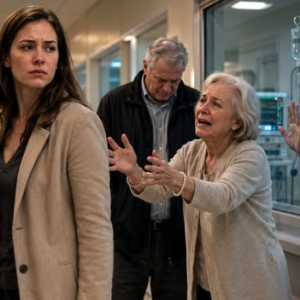
For a second, no one moved.
The fluorescent lights hummed above us.
A cart rattled somewhere beyond the double doors, followed by the soft mechanical chime of an elevator arriving on the floor.
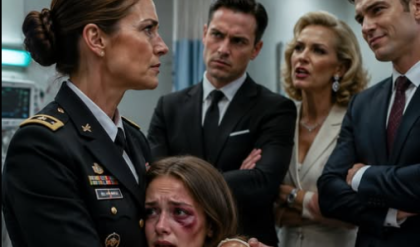
Through the isolation-room window, my brother remained motionless, his forehead resting against the glass.
The doctor lowered the consent form.
“I understand,” he said.
“I’ll document that you declined testing.”
My mother inhaled sharply.
“You can’t be serious.”
“I have never been more serious.”
“Clara, this is his life.”
I adjusted the strap of my bag over my shoulder.
“So was Lily’s.”
My father looked up then.
His face had aged in the three years since my daughter’s funeral, but grief had not softened him.
It had merely hollowed out the space behind his eyes.
“Please don’t do this here,” he said.
I almost smiled.
“Where would you prefer? At a restaurant? At Daniel’s housewarming party?”
My mother glanced toward the nurses’ station, embarrassed that strangers might overhear us.
Even now, appearance came before pain.
She stepped closer and lowered her voice.
“We know you’re angry.”
“Angry?”
“You have every right to be.”
“No.
Anger is what you feel when someone cuts you off in traffic.
What I feel has lived in my bones for three years.”
Daniel lifted his head behind the glass.
His eyes found mine.
There was no accusation in them.
No demand.
Only fear.
That made it harder to leave.
But I had learned that difficult did not mean wrong.
My mother followed my gaze and mistook my hesitation for surrender.
“He didn’t make the decision,” she whispered.
“Your father and I did.”
“And he kept the house.”
“He was newly married.”
“My daughter was dying.”
“We didn’t know she would die.”
“You knew she might.”
My father rubbed both hands over his face.
“The doctors said the treatment was experimental.”
“They said it was a clinical treatment with a reasonable chance of slowing the disease.”
“There were no guarantees.”
“There are never guarantees.”
My mother’s voice cracked.
“We were afraid of losing the money and losing Lily too.”
I stared at her.
The honesty of that sentence was uglier than any lie.
“So you invested in the child you thought would live.”
Her lips parted, but no sound came.
That was exactly what they had done.
Daniel had been thirty-two, healthy, successful and newly engaged.
Lily had been eight, bald from chemotherapy and too weak to climb the stairs without holding my hand.
My parents had looked at those two futures and decided which one deserved their money.
They had not simply refused to help.
They had made a calculation.
A house would appreciate.
A dying child might not.
The doctor cleared his throat gently.
“Ms.
Pierce, I want to be clear about something.
Declining testing is your legal and ethical right.
No one should attempt to coerce you.
But your brother’s condition is serious, and the family may need to explore other donor options quickly.”
My mother turned on him.
“How quickly?”
“We’re still completing his workup.
There are registries, unrelated donors, cord-blood options and potentially other relatives.
A sibling match can be valuable, but it is not the only possibility.”
“Potentially?” she repeated.
“What does that mean?”
“It means we need more information.”
She looked back at me as though the doctor had just confirmed that I was holding Daniel’s heart in my hands.
“Clara, at least take the test.
You don’t have to decide about the donation tonight.”
That was the trap.
One step, then another.
A blood draw.
A result.
A match.
A room full of pleading faces.
A lifetime of being called a murderer if I said no.
I shook my head.
“No.”
My mother’s expression changed.
The grief vanished first.
Then the fear.
What remained was outrage.
“You would let your own brother die to punish us?”
“I am leaving a hospital.
I am not killing anyone.”
“You know what could happen.”
“Yes,” I said.
“I know exactly what it feels like to know what could happen and still hear your parents say they cannot spare a cent.”
My father stepped between us.
“That is enough.”
I turned toward him.
“No, Dad.
Enough was three years ago.”
His jaw tightened.
“We buried our granddaughter too.”
“You stood beside her grave.
You did not earn the right to use the word ‘we.’”
My mother covered her mouth.
Daniel struck the glass with the heel of his hand.
The sound was weak, but it stopped all of us.
He pointed at me, then gestured toward the telephone mounted beside the window.
A nurse entered his room, checked his mask and picked up the receiver.
She motioned for me to use the phone on our side.
I almost refused.
Then I remembered Daniel at twelve, standing between me and a neighborhood bully twice his size.
I remembered him teaching Lily how to ride a bicycle, running behind her with one hand on the seat.
I remembered all the versions of my brother that had existed before the house.
I lifted the receiver.
Daniel’s breathing came faintly through the line.
“Clara.”
His voice sounded scraped raw.
“I’m leaving.”
“I heard.”
“Then you understand.”
He closed his eyes briefly.
“I understand why.”
“Do you?”
“Yes.”
The answer came too quickly.
My grip tightened around the receiver.
“Did you know?”
He looked toward our parenTS.
My mother shook her head at him.
That tiny movement told me more than any confession.
“Daniel,” I said, “did you know the money for your house was the money I had asked them to use for Lily?”
My mother reached for the phone.
I moved beyond her grasp.
Daniel remained silent.
The corridor seemed to contract around me.
“Answer me.”
“I knew you had asked them for help.”
“That isn’t what I asked.”
His eyes filled.
“I didn’t know how serious it was.”
“You visited Lily in the hospital.”
“They told me the Boston treatment was unlikely to work.”
“Who told you?”
“Mom and Dad.”
My mother began crying.
Daniel continued before she could interrupt.
“They said you were desperate and not thinking clearly.
They said the doctors in Cleveland believed there was nothing more to do.”
“That was not true.”
“I know that now.”
“Did you know the deposit was ninety-two thousand dollars?”
His silence returned.
That was my answer.
I felt strangely calm.
“When did you know?”
“The week before closing.”
My father whispered his name.
Daniel ignored him.
“Mom said the money had already been committed.
She said canceling the purchase would cost penalties and embarrass Elise’s family.”
A laugh escaped me.
Embarrassment.
My daughter had begged for ice chips because sores in her mouth made drinking painful, but my family had been protecting itself from embarrassment.
“Did you ask them to cancel?”
Daniel pressed his palm to the glass.
“No.”
The word was almost inaudible.
My mother sobbed harder.
My father turned away.
I looked at the man behind the glass and saw the boy who had protected me, the uncle who had once carried Lily on his shoulders, and the adult who had accepted a set of silver keys while knowing my child needed the same money to reach a treatment room.
“Why?” I asked.
Daniel swallowed.
“Elise was pregnant.”
I stared at him.
“What?”
“She had just found out.
We hadn’t told anyone except Mom and Dad.
The apartment had mold.
We thought the house was our chance to start safely.”
“You did not have a child then.”
“We thought we did.”
“What happened?”
His face crumpled.
“She miscarried two weeks after we moved in.”
I had not known.
No one had told me.
For one disorienting moment, grief reached across the glass and tried to make us siblings again.
Then I remembered Lily.
“Did you ever think of selling the house?”
“Every day.”
“But you didn’t.”
“Elise refused.
Then the market changed, and the mortgage—”
“What mortgage? Mom and Dad paid cash.”
Daniel looked at our father.
My father closed his eyes.
Something inside me sharpened.
“What mortgage?”
Daniel’s shoulders dropped.
“Dad took out a home-equity loan against their house to complete the purchase.
The gift wasn’t all cash.
I’ve been making payments to him.”
My mother stepped forward.
“This is not the time.”
“No,” I said.
“It is exactly the time.”
My father stared at the floor.
I felt as though I had walked into the final scene of a play everyone else had been rehearsing without me.
“How much did you give him?”
My father answered at last.
“One hundred and eighty thousand.”
My ears rang.
“I asked for ninety-two.”
“We didn’t have ninety-two in cash.”
“But you found one hundred and eighty for Daniel.”
“The loan had already been approved.”
“You applied for it.”
“We believed property was a responsible investment.”
There it was again.
Investment.
Calculation.
A future chosen over a child.
I lowered the telephone.
Daniel called my name, but his voice became a faint murmur against my palm.
I placed the receiver back in its cradle.
My mother moved into my path once more.
“Whatever he did, he admitted it.
Doesn’t that matter?”
“Not tonight.”
“He may not have another night.”
The sentence hit its target.
She knew it would.
For three years, I had lived with the memory of the last night Lily had been conscious.
The room had smelled like antiseptic and grape lip balm.
Snow had pressed against the windows in wet gray sheeTS. Lily had been too tired to speak above a whisper.
“Mommy,” she had said, “do people still get birthdays after they die?”
I had told her I did not know.
She had thought for a while, then smiled.
“Maybe you can make me one anyway.”
I had promised.
Every November, I baked a small strawberry cake and carried it to the pediatric oncology floor.
I gave slices to nurses, patients and parents who looked as lost as I had once felt.
My mother did not know that.
Daniel did.
He had come the first year and stood outside the elevators for nearly twenty minutes before leaving without speaking to me.
Now he was asking for a future Lily had never received.
I stepped around my mother.
She caught my arm again.
“Clara, please.”
I removed her hand finger by finger.
“Ask the house,” I repeated.
Then I walked away.
1.
THE MESSAGE
I made it to the parking garage before my knees weakened.
I sat inside my car without turning on the engine, both hands resting on the steering wheel.
For three years, I had imagined what it would feel like if my parents ever needed something from me.
In those fantasies, I was composed.
Powerful.
Unmoved.
I had never imagined Daniel behind glass.
I had never imagined the look in his eyes after he admitted he had known.
My phone began vibrating inside my bag.
Mom.
I rejected the call.
It rang again.
Dad.
I rejected that one too.
A third call came from a number I did not recognize.
I let it go to voicemail.
Then a text appeared from Daniel.
I did not know patients in isolation were allowed to use their phones, but the message was there.
I’m sorry.
I should have sold it.
I should have done something.
You don’t owe me anything.
A second message followed.
Don’t let them blame you.
I leaned back and closed my eyes.
That was the problem with Daniel.
He had never been simple enough to hate.
He had made a monstrous choice, but he was not a monster every day.
He had sent Lily science kits during her first hospitalization.
He had watched cartoons beside her bed.
He had built a wooden ramp for her wheelchair when the porch steps became too difficult.
Then, when it mattered most, he had chosen himself.
Perhaps most betrayals were committed by people capable of love.
That was what made them betrayals.
My phone rang again.
This time the screen showed Mara Vance.
Mara had been Lily’s favorite nurse at St.
Vincent.
After Lily died, she became the only person from that part of my life I could bear to see.
I answered.
“Clara?”
“Hi.”
“You sound strange.”
“I’m in the parking garage.”
“At St.
Vincent?”
“Yes.”
“What happened?”
I told her.
Not everything.
Just enough.
Daniel’s diagnosis.
My parents’ request.
My refusal.
Mara remained silent for several seconds.
“Do you want me to come down?”
“No.”
“That wasn’t my question.”
I looked through the windshield at the concrete wall.
“Yes.”
“Level?”
“Four.”
“I’ll be there.”
She ended the call.
Ten minutes later, the stairwell door opened and Mara emerged in navy scrubs beneath a long winter coat.
She spotted my car, walked over and climbed into the passenger seat without knocking.
For a while, neither of us spoke.
Then she handed me a paper cup.
“Tea.”
I took it.
“I said no.”
“I know.”
“To the test.”
“I know what you meant.”
“I walked out.”
“Okay.”
I turned toward her.
“That’s all you’re going to say?”
“What are you hoping I’ll say?”
“That I’m terrible.
Or justified.
Something clear.”
Mara removed her hospital badge and placed it in her pocket.
“This isn’t clear.”
“He might die.”
“Yes.”
“I might be able to help.”
“You might.”
“And I said no because of something that happened three years ago.”
“No.
You said no because you were ambushed in a hallway by the same people who abandoned you during the worst moment of your life.”
I stared down at the tea.
“Is there a difference?”
“Yes.”
“What difference?”
“One is revenge.
The other is a boundary.”
“It felt like revenge.”
“Feelings are evidence, Clara.
They’re not always verdicTS.”
I looked at her.
She had said similar things during Lily’s final months, when guilt turned every choice into a weapon against me.
“If I get tested, they win.”
“This is not a trial.”
“It feels like one.”
“Then stop letting your parents be the judge.”
A car alarm chirped two rows away.
I pressed my palms against the warm cup.
“What would you do?”
Mara shook her head.
“No.”
“You wouldn’t get tested?”
“I wouldn’t answer that question for you.”
“Why?”
“Because you would spend the rest of your life telling yourself you did what a nurse told you to do.”
She was right, and I hated her for it.
My phone vibrated again.
Another message from Daniel.
This one contained a photograph.
Lily sat on his shoulders at the Cleveland Botanical Garden, both hands raised toward a cloud of butterflies.
She was six in the picture, before the first bruise appeared on her leg, before blood tests, before cancer entered our vocabulary.
Below it, he had written:
She made me promise to give you something if you ever stopped speaking to me.
It’s in my house.
Top shelf of the office closet.
Blue box.
My breath caught.
“What is it?” Mara asked.
I showed her.
“Did you know about a box?”
“No.”
“Are you going to get it?”
“I’m not going anywhere near that house.”
Mara looked at the message again.
“Then ask someone else to retrieve it.”
“My parents?”
“No.”
“Elise and I haven’t spoken since the funeral.”
“Then perhaps it’s time.”
I stared at Lily’s face on the screen.
She looked so alive that for one second my mind rejected the years between us.
“When did she make him promise?”
“Only Daniel knows.”
“Then ask him.”
I typed the question.
His answer came slowly.
Her last birthday.
She gave it to me after everyone else left.
She said not to give it to you until you were angrier than sad.
I didn’t understand.
I think I do now.
Lily’s last birthday had been six weeks before she died.
My parents had missed it.
They said my father had a fever and did not want to risk exposing her.
That same afternoon, photographs appeared online from a family gathering at Daniel’s new house.
I had never asked Lily what she and Daniel spoke about after I left the room.
I had been too busy cutting untouched cake and pretending the empty chairs did not matter.
Mara watched me.
“You need to see what’s in the box.”
I started the engine.
2.
THE HOUSE
Lakewood was twenty minutes away, but the drive felt longer.
The house looked exactly as it had in the photograph that destroyed me three years earlier.
Pale brick.
Dark shutters.
A wide porch.
Four bedrooms.
A silver maple spreading bare branches above the roof.
The bow was gone, but I could still see it in my memory.
Daniel had posted the photograph with the caption:
Starting our forever.
Grateful beyond words.
I had been sitting at a red light outside Lily’s school when I saw it.
The Boston clinic had canceled her intake that morning because the payment deadline passed.
Twenty-three days after my parents claimed they could not help, my brother had received a house worth nearly twice what Lily’s treatment required.
I parked across the street.
Mara had followed in her own car.
She lowered her window.
“Do you want me inside?”
“Yes.”
We crossed the road together.
Elise opened the door before I knocked.
She was thinner than I remembered, her blond hair pulled into a loose knot.
Her face held the cautious expression of someone approaching a wounded animal.
“Clara.”
“Daniel said there’s a blue box in the office closet.”
She nodded.
“He texted me.”
“May I get it?”
“It’s your brother’s house,” she said, then winced.
“I’m sorry.
That came out wrong.”
I looked past her into the foyer.
The hardwood floors gleamed.
A framed wedding photograph hung beside the staircase.
Daniel and Elise stood beneath an arch of white flowers, smiling as though nothing bad could ever reach them.
“Can I come in?”
“Of course.”
Mara introduced herself.
Elise recognized her name immediately.
“Lily’s nurse.”
“One of them.”
Elise’s eyes filled.
“I’m sorry I didn’t attend the funeral.”
I removed my coat.
“Why didn’t you?”
She looked toward the staircase.
“Because I was ashamed.”
It was not the answer I expected.
She led us down a hallway into a home office.
The room was surprisingly modest.
A desk.
Two filing cabineTS. Shelves crowded with legal books and construction manuals.
Daniel worked in commercial property management, a profession that now felt like a cruel joke.
Elise pulled a chair beneath the closet shelf and climbed onto it.
“There are several boxes.”
“Blue.”
“I see it.”
She lowered a small wooden box painted the color of a summer sky.
My name was written across the lid in Lily’s handwriting.
The sight of those uneven letters nearly dropped me to the floor.
MOMMY
The Y curled backward because Lily always forgot which direction it should face.
Elise handed me the box.
“I never opened it.”
“You knew it was here?”
“Yes.”
“Why didn’t you tell me?”
“Daniel said Lily made him promise.”
“And you let him keep it for three years?”
“He thought you would never speak to him again if he broke the promise.”
“I didn’t speak to him anyway.”
“I know.”
I sat at Daniel’s desk.
The box had no lock.
My fingers rested on the lid, but I could not lift it.
Mara placed one hand on my shoulder.
“You don’t have to open it here.”
“Yes, I do.”
I raised the lid.
Inside lay a folded sheet of paper, a purple friendship bracelet, two photographs and a small plastic star from the prize basket on the oncology floor.
The bracelet was too small for my wrist.
Lily had made dozens of them during treatment, knotting colored thread around a clipboard because her hands trembled too much to hold it freely.
I unfolded the letter.
The handwriting shifted between careful printing and wandering lines.
Dear Mommy,
Uncle Daniel says you are mad at Grandma and Grandpa because they got him the house.
I’m mad too but don’t tell them because Grandma cries when people tell the truth.
A sound escaped Elise.
I continued reading.
I heard you talking to the doctor about Boston.
You said you would sell everything but we don’t have enough things.
I’m sorry I’m expensive.
The words blurred.
Mara knelt beside me.
I pressed the paper flat.
“No,” I whispered.
“No, baby.”
Elise turned away, covering her face.
I forced myself to continue.
Uncle Daniel said he wishes he could fix it.
I told him houses can be sold because I saw that on TV.
He said grown-up things are complicated.
I think complicated means people know what is right but they are scared to do it.
My brother had carried that sentence for three years.
So had I, without knowing it.
I don’t want you to be mad forever because then they get to keep hurting you even when they aren’t there.
But don’t forgive them because they cry.
Forgive them only if they make something good out of the bad thing.
I stopped.
The room became silent except for the heater clicking in the wall.
For my birthday after I’m gone, can you help one kid get medicine? Not all the kids because that is too much.
Just one.
Then maybe next year another one.
Uncle Daniel says his house has four bedrooms.
Maybe one room could help.
Beneath the sentence, she had drawn a square house with four windows.
In one window stood a stick figure with no hair.
In another stood a woman holding a cake.
I love you the biggest number.
Lily
I lowered the letter.
For several minutes, none of us spoke.
Elise sat on the edge of a cabinet.
“She asked him to sell the house.”
“Yes.”
“He told me once that she said something like that.
I thought she was joking.”
“Lily did not joke about money after she heard what the treatment cost.”
“I didn’t know she thought she was expensive.”
“She should never have known.”
Elise wiped her face.
“You should know something else.”
I placed the letter back in the box.
“What?”
“The house isn’t ours anymore.”
I looked around.
“We’re standing in it.”
“We transferred the deed two weeks ago.”
“To whom?”
“Your parenTS.”
The answer made no sense.
“Why?”
“Daniel’s medical bills started months before the leukemia diagnosis.
Tests, admissions, specialisTS. His insurance covered a lot, but not everything.
He missed work.
We fell behind on the payments to your father.”
“I thought this was a gift.”
“So did everyone else.”
“Did you know about the loan when you accepted it?”
“Not at first.”
“When did you find out?”
“After the miscarriage.”
She spoke the word quietly.
I looked toward Mara, but her expression remained unreadable.
Elise continued.
“Your father came over with a folder.
He said Daniel needed to sign a repayment agreement because the loan was affecting their retirement.
Daniel signed it.
The monthly payment was less than rent, so we told ourselves it was still a gift.”
“It was leverage.”
“Yes.”
“Why transfer the deed back?”
“Your mother said they would cover Daniel’s treatment expenses if we did.”
I laughed once.
The sound held no humor.
“They bought the house twice.”
Elise nodded.
“And now they’re using it to buy your cooperation.”
My stomach turned.
“What do you mean?”
“She called me before you arrived at the hospital.
She said if you refused testing, I should remind you that Daniel had lost the house and had already paid for his mistake.”
I closed my eyes.
My mother could turn anything into currency.
A house.
A child.
A diagnosis.
A confession.
“What did you tell her?”
“That I wouldn’t do it.”
“Why?”
“Because Lily was right.”
Elise glanced at the letter.
“Complicated usually means people know what is right but are scared to do it.”
I studied her.
“You benefited too.”
“I know.”
“You lived here while my daughter died.”
“I know.”
“You posted photographs.”
“I know.”
“You never called me.”
“I know.”
Her willingness to accept each accusation left me nowhere to throw the next one.
Finally she said, “I was twenty-nine, pregnant and terrified.
I told myself your parents were exaggerating about Lily’s chances.
I told myself the house money could not simply become treatment money.
I told myself Daniel would help you in another way.”
“Did he?”
“He tried to borrow against the house.”
I froze.
“When?”
“After Lily’s birthday.”
“Why didn’t he?”
“Your father had placed a lien on the property through the repayment agreement.
Daniel couldn’t borrow without his consent.”
“Did Dad refuse?”
“Yes.”
The room tilted.
My father had not merely chosen the house over Lily.
He had prevented Daniel from reversing the choice.
“Do you have proof?”
Elise opened the lower drawer of the filing cabinet and removed a folder.
Inside were copies of loan applications, emails and a letter from a bank explaining that additional financing required lienholder authorization.
There was also an email from my father to Daniel.
I will not jeopardize two households to fund a speculative procedure.
Clara must learn to accept reality.
Do not raise this again.
The email was dated six days after Lily’s birthday.
Three weeks before her death.
My hands began shaking.
Mara took the folder from me before I tore it apart.
“Elise,” she asked, “does Clara’s mother know these documents still exist?”
“No.”
“Does Daniel?”
“Yes.”
“Why didn’t he give them to Clara?”
Elise looked at me.
“Cowardice.”
It was the only answer that fit.
I stood.
“I need to go.”
“Clara.”
I turned back.
Elise’s eyes were red.
“I’m not asking you to save him.”
“Good.”
“But Daniel started something after Lily died.”
She removed another folder from the cabinet.
This one was labeled LILY PROJECT.
Inside were incorporation papers for a nonprofit organization that had never launched.
A mission statement described emergency grants for families seeking pediatric clinical treatment when insurance denied upfront cosTS.
The proposed name was Lily’s Room.
I stared at the words.
“He filed the paperwork six months after the funeral,” Elise said.
“He planned to sell the house and use the equity as the first donation.
Your father threatened to sue us for breach of the repayment agreement.
Daniel backed down.”
“He always backed down.”
“Yes.”
“Why show me this now?”
“Because he may die, and I don’t want the only true thing you know about him to be the worst thing he ever did.”
I closed the folder.
“The worst thing he did is still true.”
“I know.”
“And good intentions do not change what happened.”
“I know.”
“But they matter to you.”
“They matter because I loved him before I hated what we became.”
The sentence landed between us.
She and I were not so different after all.
Both of us had loved Daniel.
Both of us had watched fear make him smaller.
I picked up Lily’s blue box.
At the doorway, Elise spoke again.
“Your parents are selling their house.”
I turned.
“What?”
“They listed it privately yesterday.”
“Why?”
“To cover Daniel’s transplant and long-term care.”
The irony was so sharp it almost felt physical.
“They wouldn’t borrow ninety-two thousand for Lily, but they’ll sell their own home for Daniel.”
Elise shook her head.
“No.
They’re selling it because Daniel told them he would refuse their money unless they used part of it to fund Lily’s Room.”
I said nothing.
“He told them this before he knew whether you would come.”
“Why would he do that?”
“Because he thought he was going to die before he had the courage to make anything right.”
I looked down at the little blue box.
On the lid, Lily’s backward Y smiled up at me like a secret.
3.
THE SECOND REQUEST
I did not return to the hospital that night.
I went home, placed Lily’s letter on the kitchen table and read it until dawn.
At seven in the morning, someone knocked on my door.
My father stood outside alone.
He wore the same clothes from the hospital, though his shirt was wrinkled and his tie hung loose around his neck.
“I asked you not to come here,” I said.
“You asked your mother.”
“I meant both of you.”
“I need five minutes.”
“You have one.”
He looked past me.
“May I come in?”
“No.”
His face tightened, but he nodded.
“Daniel developed a fever overnight.
The doctors moved him to intensive care.”
I gripped the edge of the door.
“What kind of fever?”
“I don’t know.
Infection, maybe.
Your mother is with him.”
“Why are you here?”
“To tell you the truth.”
“Three years late.”
“Yes.”
The word stopped me.
My father had never agreed with an accusation so easily.
He reached into his coat and removed a thick envelope.
“I knew the Boston treatment was more promising than we told Daniel.”
My throat closed.
“I read the physician’s letter.
The one you sent us.”
“You said you didn’t understand it.”
“I understood enough.”
“Then why?”
He looked toward the floor.
“I was afraid.”
“Of losing money?”
“Of hope.”
I stared at him.
He continued before I could speak.
“When your mother’s sister was sick, the family spent everything on treatmenTS. Every new doctor promised another chance.
They lost the house.
They took loans.
She died anyway.
Your mother grew up believing hope was something doctors sold to desperate families.”
“This was not the same.”
“I know.”
“No, you don’t.”
“I know now.”
I almost closed the door.
He lifted the envelope.
“There is something else.”
“What?”
“The money for Daniel’s house did not begin as a wedding gift.”
I waited.
“It was intended for both of you.”
My hand tightened around the doorknob.
“Explain.”
“When my mother died, she left us an investment account.
About two hundred thousand dollars.
Her instructions were informal, but she wanted it divided between her grandchildren when they needed help buying homes.”
“Daniel and me.”
“Yes.”
“I already owned a home.”
“You had a mortgage.”
“So half of that money belonged to me?”
“Morally, yes.”
“Legally?”
He hesitated.
My answer was in that hesitation.
“Dad.”
“The account passed to me without restrictions.”
“You used my half to buy Daniel’s house.”
“Your mother and I believed you were financially stable.”
“I was asking you for money to keep my daughter alive.”
“We thought using inherited money for an unproven treatment violated your grandmother’s intention.”
“But using my share to buy Daniel four bedrooms did not?”
He lowered his head.
I opened the door wider, not to invite him in but because I suddenly needed more air.
“How much was my half?”
“At the time, approximately one hundred and six thousand.”
More than the Boston deposit.
My daughter could have entered treatment using money my grandmother had meant to help me.
My father had taken it, renamed it and handed it to Daniel.
The hallway blurred.
“You stole from me.”
“I told myself it was redistribution within the family.”
“You stole from Lily.”
His mouth trembled.
“Yes.”
That single word struck harder than denial.
I wanted him to argue.
I wanted to fight.
Instead, he stood on my porch holding the weight of his own confession.
“What is in the envelope?”
“Copies of the account records.
The original letters from your grandmother.
The loan documenTS. The house deed.
Everything.”
“Why give them to me?”
“Because the house in Lakewood should be yours.”
I laughed bitterly.
“I don’t want it.”
“Sell it.”
“For Daniel’s treatment?”
“For whatever you choose.”
“I choose Lily.”
He nodded.
“I expected that.”
“Did you?”
“Daniel insisted.”
The mention of my brother reignited my anger.
“Daniel insists now that he is sick.”
“He insisted before the diagnosis.”
“When?”
“Eight months ago.”
I said nothing.
“He came to our house with the nonprofit paperwork.
He said we had buried what we did and called it grief.
He said Lily had been dead longer than she had been sick, and we were still protecting the money.”
My father’s voice broke.
“He told us he wanted the house transferred to you.
I refused.
We argued.
He stopped making payments and said I could sue him if I wanted.
That is why we took back the deed.”
“You took it back to stop him from giving it to me.”
“Yes.”
“And now?”
“Now I know there will never be a day when keeping it costs less than returning it.”
I looked at the envelope.
“This does not buy a blood test.”
“I know.”
“It does not buy forgiveness.”
“I know.”
“It does not make you my father again.”
His eyes filled, but he nodded.
“I know.”
I took the envelope.
Then I closed the door.
On the other side, I heard him remain on the porch for nearly a minute before his footsteps moved away.
I carried the envelope to the kitchen and spread the documents beside Lily’s letter.
My grandmother’s handwriting appeared on the first page.
For Clara and Daniel, so each of them will always have a safe place to raise a family.
A safe place.
I pictured the Boston clinic turning us away.
I pictured Lily asking whether she was expensive.
I pressed both fists against my eyes.
My phone rang.
It was the hospital.
For one terrible second, I thought Daniel was dead.
“Ms.
Pierce?” a woman said.
“This is Dr. Shah from St.
Vincent.
Your brother asked that I contact you directly.”
“Is he alive?”
“Yes, but he is critically ill.
He has developed sepsis and is being treated in intensive care.”
I sat down.
“Why are you calling me?”
“Your brother listed you as his healthcare proxy last year.”
I closed my eyes.
“No.”
“We have documentation signed and witnessed.”
“He’s married.”
“His wife is listed as the alternate.
According to the document, you are first.”
“Why?”
“I can’t answer that.”
“Is he conscious?”
“Intermittently.
He has requested to speak with you.”
I looked at Lily’s letter.
One room could help.
“Put him on the phone.”
There was a pause, then the sound of equipment.
Daniel’s voice came faintly.
“Clara?”
“I’m here.”
“Dad told you?”
“Yes.”
“I’m sorry.”
“I am tired of that sentence.”
“I know.”
“Why am I your proxy?”
“Because Elise would spend everything to keep me alive.”
“And I wouldn’t?”
“You would ask whether it was helping.”
The answer hurt because it was true.
“What do the doctors need decided?”
“Nothing yet.”
“Then why call me?”
His breathing became rough.
“I wanted to tell you before I couldn’t.”
“Tell me what?”
“I changed the nonprofit documenTS.”
“What did you change?”
“The board.
The house.
Everything goes to you.”
“I don’t want your house.”
“It was always half yours.”
“My daughter needed treatment, not real estate three years later.”
“I know.”
“Stop saying that.”
“I don’t know what else to say.”
“Say why you kept it.”
He was silent for so long that I thought the connection had failed.
Then he whispered, “Because after Elise lost the baby, the house felt like proof that something had still gone right.”
My anger shifted but did not disappear.
“I told myself I would sell it after we recovered.
Then after the first year.
Then after we had paid Dad more.
Then after I fixed things with you.”
“You waited until every choice belonged to tomorrow.”
“Yes.”
“Lily did not have tomorrow.”
“No.”
I heard him crying.
I had seen Daniel cry only twice before.
At our grandmother’s funeral.
And in the hospital room after Lily died, when he arrived forty minutes too late.
“I am not asking you to donate,” he said.
“Mom is.”
“She is wrong.”
“You want to live.”
“More than anything.”
“Then why aren’t you asking?”
“Because Lily asked me for one thing, and I failed her.
I won’t use her death to take something else from you.”
I gripped the phone.
“What exactly did she say to you?”
“She asked me to sell one room.”
“What?”
Daniel coughed.
A nurse murmured in the background.
“On her birthday.
She said the house had four bedrooms and I only needed one to sleep in.
She asked whether I could sell one room and give the money to you.”
Despite everything, a broken laugh escaped me.
“That sounds like Lily.”
“I told her houses weren’t sold by the room.”
“What did she say?”
“She said grown-ups made bad rules.”
My eyes burned.
“She wasn’t wrong.”
“No.”
The line filled with his strained breathing.
Then Daniel said, “If I die, make the house do what we should have done.”
“I’m not promising you anything.”
“Promise her.”
The call ended before I could answer.
4.
THE TEST
At eleven that morning, I returned to St.
Vincent.
My parents were seated outside intensive care.
My mother rose as soon as she saw me.
“Clara.”
I walked past her to the nurses’ station.
“Dr. Shah asked me to come.”
A nurse directed me to a consultation room.
My mother followed.
I turned.
“Not you.”
“I’m his mother.”
“And I’m his healthcare proxy.”
Her face changed.
“You knew?”
“I found out this morning.”
“Daniel was frightened when he signed those papers.”
“He signed them last year.”
“He wasn’t thinking clearly.”
“He was thinking clearly enough to know you would confuse love with ownership.”
She recoiled as though I had struck her.
My father took her arm.
“Let her go.”
For once, she obeyed.
Dr. Shah met me in the consultation room with Daniel’s hematologist, Dr. Levin.
They explained the infection, the treatment, the uncertain hours ahead.
Daniel’s leukemia was aggressive, but if the sepsis could be controlled, he might still reach remission and become eligible for transplantation.
Then Dr. Levin placed a familiar consent form on the table.
“Your brother asked us not to raise donation with you again,” she said.
“However, since you are here, I need to clarify that HLA typing does not obligate you to donate.”
“I understand.”
“You may also choose to be tested confidentially.
The transplant team can tell the family only that you are unavailable as a donor, regardless of the medical or personal reason.”
I looked at her.
“They would not know whether I matched?”
“Not unless you authorized disclosure.”
The knowledge altered the shape of the decision.
At the hospital the previous night, the test had felt like a public contract.
A needle inserted beneath my parents’ gaze.
Now it could belong only to me.
Mara’s words returned.
Stop letting your parents be the judge.
I thought of Daniel telling me not to let them blame me.
I thought of Lily’s letter.
Don’t forgive them because they cry.
Forgive them only if they make something good out of the bad thing.
Forgiveness was not the same as rescue.
A test was not forgiveness.
A donation would not erase the house.
And refusing solely to preserve my anger would let my parents’ old decision control one more life.
“Test me,” I said.
Dr. Levin studied my face.
“Are you certain this is your independent decision?”
“Yes.”
“Has anyone threatened or pressured you?”
“They tried.”
“That is not what I asked.”
“No.
My decision is mine.”
She nodded.
The blood draw took less than five minutes.
Ninety-two thousand dollars had stood between Lily and a treatment room.
Only two small tubes of blood stood between Daniel and the possibility of a match.
The unfairness of it made me nauseated.
When I left the collection room, my mother rushed toward me.
“Did you agree?”
I walked past her.
“Clara?”
I stopped beside the elevator.
“This test is confidential.”
Her expression revealed her answer before she spoke.
“You did.”
“I said it is confidential.”
“Why would it be confidential unless you had something to hide?”
My father closed his eyes.
I pressed the elevator button.
“Because my body is not another family asset for you to distribute.”
“We are not asking for money.”
“That is why you believe you are entitled to it.”
The elevator doors opened.
My mother stepped in front of them.
“If you are a match and refuse, I will never understand you.”
I looked at her.
“You never tried.”
Then I entered the elevator.
5.
THE MATCH
Daniel survived the infection.
For twelve days, his condition shifted between improvement and collapse.
He was intubated once, extubated, then moved back to the hematology floor.
During that time, I visited without telling my parenTS.
Sometimes Daniel slept.
Sometimes we spoke through the glass.
We did not discuss forgiveness.
We discussed Lily.
He told me stories I had never heard.
How she cheated at card games by hiding queens beneath her blanket.
How she made him promise to learn the names of five constellations.
How she had once asked whether his new house had ghosts and then declared that all large houses should come with at least one.
On the eighth day, the transplant coordinator called me.
“You are a full sibling match,” she said.
I sat at my kitchen table, staring at Lily’s letter.
The coordinator explained the process, the risks, the evaluations and the fact that Daniel first needed chemotherapy to achieve remission.
“You do not have to decide today,” she said.
“Yes, I do.”
“Ms.
Pierce—”
“If I wait, my parents become part of the decision again.”
“What would you like us to tell the family?”
“That I am medically available.”
“And if your brother reaches transplant?”
“I will donate.”
The words left me more quietly than I expected.
No thunder.
No relief.
Just a decision.
“Would you like your brother informed that you are the match?”
I looked at Lily’s photograph.
“Yes.
Tell Daniel.”
“Your parents?”
“No.”
The coordinator hesitated.
“That may be difficult to maintain once planning begins.”
“I know.”
“May I ask why you are choosing to donate?”
I thought carefully.
“Not because he deserves it.”
She waited.
“And not because my parents asked.”
“All right.”
“I’m doing it because I refuse to become the person their choice tried to make me.”
When Daniel learned, he asked to see me.
I entered his room wearing a mask and protective gown.
He looked smaller in the bed than he had behind the glass.
“You matched,” he said.
“Yes.”
“And you agreed.”
“If you reach remission.”
His eyes filled.
“Why?”
“I am not doing this so you can spend the rest of your life thanking me.”
“I will.”
“Then I’ll change my mind.”
A weak smile touched his mouth.
“That sounds fair.”
I pulled the chair closer.
“There are conditions.”
He nodded immediately.
“The house is sold.”
“Yes.”
“Every dollar of equity goes to Lily’s Room.”
“Yes.”
“You disclose the loan documents and the inherited account to an attorney.”
“Yes.”
“Mom and Dad do not control the nonprofit.”
“Yes.”
“Elise cannot either.”
“Agreed.”
“You and I will not run it alone.
We appoint doctors, social workers and parents who have gone through treatment denials.”
“Yes.”
“And the grants will never depend on whether a child’s treatment is guaranteed to work.”
Daniel’s face broke.
“Yes.”
I leaned back.
“One more condition.”
“Anything.”
“You tell Mom and Dad that I’m the match.”
He blinked.
“I thought you wanted it confidential.”
“I wanted the choice to be mine.
It is.”
“What do you want me to tell them?”
“The truth.”
“All of it?”
“All of it.”
My parents arrived that afternoon.
I waited in the corridor while Daniel spoke to them privately.
Through the glass, I watched my mother’s face change.
Relief came first.
Then gratitude.
Then something darker when Daniel continued speaking.
He pointed toward the folder on his bedside table.
My father sat down.
My mother shook her head repeatedly.
Daniel did not stop.
After twenty minutes, the door opened.
My mother came out first.
“You are the match.”
“Yes.”
She reached for me.
I stepped back.
Her arms fell.
“You’re going to save him.”
“I’m going to donate stem cells if his treatment succeeds.”
Tears spilled over her cheeks.
“I knew you wouldn’t let your brother die.”
The old fury rose instantly.
“This is not proof that you were right about me.”
“I didn’t say—”
“You were prepared to call me cruel if I refused.
Now you want to call me good because I agreed.
Both versions make my decision about you.”
My father emerged behind her.
He looked exhausted.
“What do you want us to do?” he asked.
“Daniel told you.”
My mother turned on him.
“We cannot give everything away.
We need somewhere to live.”
“You are selling your house for Daniel’s care.”
“That was before you agreed to donate.”
I stared at her.
There it was.
The calculation returning before the tears had dried.
Daniel’s match had reduced the amount she believed she owed.
“You thought my body would save you money.”
Her mouth opened.
“That is not what I meant.”
“It is exactly what you meant.”
My father spoke quietly.
“The house sale will continue.”
She spun toward him.
“Robert.”
“We are doing it.”
“We will have nothing.”
“We have pensions.
Savings.
We can rent.”
“That house has been ours for thirty-four years.”
“And Lily had eight.”
My mother froze.
My father’s voice shook, but he continued.
“I chose walls over her once.
I will not do it again.”
She stared at him as if he had betrayed her.
Perhaps, in her mind, he had.
Then she looked through the window at Daniel.
“What will people think?”
The question was so familiar that I almost pitied her.
“What people?” I asked.
“Our family.
Our friends.”
“Tell them the truth.”
Her face drained.
“You want to humiliate us.”
“No.
I want Lily’s Room funded.”
“You want everyone to know what we did.”
“Those are not the same thing.”
“They are to you.”
“No, Mom.
They are the same to you because being seen clearly feels like punishment.”
She shook her head.
“I cannot do this.”
My father removed his house keys from his pocket and placed them in her hand.
“Then keep the house.”
She stared at him.
“I’ll leave.”
“Robert.”
“I signed the listing agreement.
My share of the proceeds will go to the foundation.
If you stop the sale, I will file for partition.”
“You would destroy our marriage?”
He looked through the glass at his son, then at me.
“No.
I think we did that years ago.
We just kept living in the building.”
My mother made a sound like a gasp and walked away.
No one followed her.
6.
THE PRICE OF SURVIVAL
Daniel reached remission after two rounds of chemotherapy.
The transplant was scheduled for early spring.
Before my collection procedure, I underwent physical examinations, counseling and another private interview confirming that I was acting voluntarily.
Every professional involved asked whether I felt pressured.
The honest answer changed from day to day.
My parents’ pressure had not disappeared.
It had become quieter.
My mother sent flowers.
She left voicemails describing Daniel’s childhood.
She mailed me a photograph of the two of us in matching winter coats, as though shared history were a debt collector.
I never responded.
My father handled the sale of his house and the Lakewood property.
My mother refused to sign the first set of papers.
Then Daniel called her from the hospital and said he would decline the transplant if she blocked Lily’s Room.
I was furious when I learned.
“You cannot use your treatment as leverage,” I told him.
“I learned from experTS.”
“That is not funny.”
“No.”
“If you refuse treatment, my donation is meaningless.”
“I knew she would sign.”
“You did not know.”
“I was trying to make it right.”
“You are still trying to control the ending.”
He looked away.
That was Daniel’s flaw.
Cowardice had ruled him for years.
Now desperation to atone made him reckless.
“You do not get to die nobly,” I said.
“You have to live and do the work.”
He met my eyes.
“What if I don’t deserve to?”
“Deserving is not the question.”
“What is?”
“What will you do with the days you receive?”
He nodded.
My mother signed.
The Lakewood house sold for considerably more than my parents had paid.
Their own house sold two months later.
After debts, taxes and medical reserves, Lily’s Room received an initial endowment of nearly four hundred thousand dollars.
My father rented a small apartment near the hospital.
My mother moved in with her sister in Columbus.
She told relatives that grief had torn the family apart.
She did not mention the inheritance.
She did not mention Boston.
She did not mention the house.
That changed when Daniel released a statement through the nonprofit’s newly created website.
He wrote it himself.
Three years ago, my eight-year-old niece, Lily Pierce, was offered a place in a clinical treatment program.
Her mother needed help paying the required deposit.
My parents and I had access to enough money to help, but we used that money to purchase a house for me instead.
Lily died months later.
No one can know whether the treatment would have saved her.
We do know that our decision took the choice away from her and her mother.
Lily’s Room exists because a child should never hear that a house, reputation or adult comfort matters more than the possibility of care.
The statement spread farther than any of us expected.
Local news stations called.
Then national outleTS.
Some people praised Daniel for admitting the truth.
Others called his confession self-serving.
Many attacked my parenTS.
A few attacked me for donating after initially refusing.
Strangers wrote that I was merciful.
Others wrote that I was weak.
I read the comments once, then closed the page.
They did not know Lily.
They did not know what the word Mommy looked like in blue paint.
The night before the transplant, my mother came to my apartment.
I saw her through the peephole and nearly remained silent.
Then she held up a small paper bag.
“I brought Lily’s birthday candles.”
I opened the door but did not invite her farther than the entryway.
She looked older than she had weeks earlier.
Her pearls were gone.
So was the careful structure of her hair.
“Where did you get those?”
“I kept them.”
“Why?”
“I don’t know.”
That answer sounded true.
She handed me the bag.
Inside were eight pink candles, their bases still marked with strawberry frosting.
I remembered lighting them in Lily’s hospital room.
My parents’ chairs had been empty.
“You should have been there,” I said.
“I know.”
“She kept looking at the door.”
My mother closed her eyes.
“I know.”
“No.
You don’t.
Daniel was there after everyone left.
He got the letter because he was there.
You were at his house.”
“Your father had no fever.”
“I know that too.”
“We lied because we could not face you.”
“You had already made your choice.”
“Yes.”
“Why did you come?”
She looked into the apartment.
On the wall behind me hung a photograph of Lily wearing a cardboard crown.
“I wanted to ask whether you could ever forgive me.”
“No.”
The speed of my answer startled her.
I continued.
“Not now.
Maybe not ever.”
Her eyes filled.
“But you’re saving Daniel.”
“This is not forgiveness.”
“What is it?”
“A refusal to let your failure decide who I become.”
She lowered her head.
“I don’t know who I am anymore.”
“That is not my responsibility.”
“No.”
She wiped her cheek.
“I have spent my whole life believing security was love.
A house.
Savings.
Reputation.
Things that kept disaster outside.”
“Disaster came inside anyway.”
“Yes.”
“And when it did, you protected the things.”
“Yes.”
For the first time, she did not defend herself.
She reached into her coat and removed a folded document.
“I signed an agreement with the foundation.”
“What kind of agreement?”
“I will work there without pay.”
I almost laughed.
“You have no qualifications.”
“I can answer phones.
File papers.
Clean.”
“That doesn’t repair anything.”
“I know.”
“People may recognize you.”
“I know.”
“They may hate you.”
“I know.”
“Then why?”
Her gaze moved toward Lily’s photograph.
“Because she said forgiveness should come only if we make something good from the bad.”
My chest tightened.
“Who told you about the letter?”
“Daniel.”
I said nothing.
“I am not asking you to forgive me because I volunteer,” she said.
“I am asking permission to begin becoming someone Lily might not be ashamed of.”
“Lily was eight.
She should not have been responsible for your conscience.”
“No.”
“Do not use her words to make yourself feel redeemed.”
“I won’t.”
“You may work there only if the board approves.
I will not intervene.”
“I understand.”
“And you do not tell people you are Lily’s grandmother unless they ask.”
My mother’s face crumpled.
But she nodded.
“All right.”
I handed the document back.
At the door, she paused.
“Are you afraid?”
“Yes.”
“May I stay tonight?”
“No.”
She accepted the answer.
That mattered more than her apology.
7.
THE TRANSPLANT
The stem-cell collection took hours.
I lay beneath a warm blanket while blood moved through tubes into a machine and returned to my body.
Nurses checked my calcium levels and brought juice.
Mara sat beside me, reading a mystery novel aloud whenever silence became too heavy.
Daniel was in another part of the hospital receiving the cells that might rebuild his blood and immune system.
My cells.
His chance.
Lily’s uncle receiving life from Lily’s mother.
The symmetry was almost unbearable.
Near the end of the procedure, Dr. Levin entered.
“Everything is going well,” she said.
“With Daniel?”
“So far.”
There were no guarantees.
For once, I did not hate the phrase.
Guarantees had never been the point.
The point was having the choice.
After the collection, I asked to see Daniel.
He was exhausted, surrounded by equipment, but conscious.
I stood outside the glass and lifted the hospital phone.
“How do you feel?” I asked.
“Like someone poured a truck into my veins.”
“That sounds medically unlikely.”
“They told me the cells know where to go.”
“They’re smarter than you.”
“That has always been true.”
For a moment, we smiled at each other.
Then his expression turned serious.
“Thank you.”
“I warned you.”
“I know.”
“No lifetime of gratitude.”
“Then what am I supposed to say?”
“Say what happens next.”
He looked toward the window, beyond which Cleveland was fading into evening.
“Next, I survive tonight.”
“And after that?”
“Tomorrow.”
“And after that?”
“I help one child.”
I swallowed.
“Then another.”
He nodded.
“Then another.”
Daniel’s recovery was neither quick nor miraculous.
He developed mouth sores, severe fatigue and another infection.
He spent weeks in isolation.
His hair fell out.
His weight dropped.
My mother visited every day but never again asked me to comfort her.
My father attended foundation meetings from the back row.
Elise rented a small apartment near the hospital and took a second job remotely after the Lakewood house sold.
When Daniel was finally discharged, he did not ring a bell or pose for photographs.
He asked to stop at the cemetery.
The four of us—Daniel, Elise, Mara and I—stood before Lily’s grave beneath a sky the color of steel.
Daniel wore a mask and leaned heavily on a cane.
He placed the plastic star from Lily’s blue box against the headstone.
“I sold all four rooms,” he whispered.
The wind moved through the cemetery grass.
I placed my hand on the stone.
“You were supposed to get birthdays,” I said.
Daniel began crying beside me.
This time, I let him.
8.
LILY’S ROOM
The foundation opened six months later in a converted brick building near St.
Vincent.
We did not call it a charity office.
We called it a bridge.
Families came to us after insurance denials, treatment delays and impossible deposit requesTS. A medical advisory panel reviewed whether a program was legitimate and appropriate, but no one asked whether survival was guaranteed.
We paid transportation cosTS.
Temporary housing.
Upfront deposiTS.
Medication gaps.
Childcare for siblings.
Sometimes we gave families only a few hundred dollars.
Sometimes tens of thousands.
The first grant went to a nine-year-old boy named Mateo whose parents needed travel expenses and a treatment deposit for a pediatric trial in Cincinnati.
His mother sat across from me holding the denial letter with both hands.
“I can repay it,” she said.
“It may take years, but I will.”
“This is not a loan.”
“I don’t want charity.”
“Neither did I.”
She looked at the photograph of Lily behind my desk.
“Is that your daughter?”
“Yes.”
“What happened to her?”
I told her.
Not every detail.
Only enough.
When I finished, she pressed the denial letter to her chest.
“What if the treatment doesn’t work?”
I thought of my father saying there were no guarantees.
I thought of my mother protecting herself from hope.
“Then you will still know you were allowed to try.”
Mateo entered treatment three days later.
He sent us a photograph from the hospital wearing a superhero cape.
My mother processed the reimbursement paperwork.
The board had approved her as an administrative volunteer after a long debate.
Two members opposed it.
One threatened to resign.
I did not defend her.
I did not oppose her.
She had asked for work, not absolution.
So they gave her work.
For the first year, she answered phones in a small cubicle.
Families often spoke to her without knowing who she was.
She heard parents cry because they could not afford hotel rooms.
She heard grandparents ask whether selling a car would be enough.
She heard mothers whisper that their children had begun apologizing for medical bills.
Every time she heard that, she left the room.
Then she returned and finished the call.
My father became the foundation’s financial compliance volunteer.
Unlike my mother, he had useful experience.
The board required independent review of everything he touched.
He accepted that too.
Daniel recovered slowly.
At first, he worked only one hour a week.
Then three.
He never became the public face of Lily’s Room.
That was his choice.
When reporters asked for interviews, he directed them to medical advisers and parents receiving granTS.
“The confession is about me,” he said.
“The work should be about them.”
Elise managed housing partnerships with hotels and short-term rental owners.
Mara joined the board.
I remained executive director, though the title felt too large for a woman who still sometimes sat on her kitchen floor holding a friendship bracelet.
We helped seventeen families in the first year.
Twenty-nine in the second.
Not every child survived.
That truth nearly broke us.
The fourth grant recipient, a five-year-old girl named Sophie, died after two months of treatment.
Her father came to the office afterward and returned seven hundred dollars they had not used.
“We could not save her,” he said.
“Give someone else the chance.”
My mother locked herself in the supply closet and sobbed.
I found her there.
For a moment, we simply looked at each other.
“I thought making something good would make it hurt less,” she whispered.
“It doesn’t.”
“Then how do you keep doing this?”
“You stop expecting good work to erase bad pain.”
She wiped her face.
“Did Lily know that?”
“Lily knew people better than the rest of us.”
My mother nodded.
“I’m sorry.”
I almost walked away.
Instead, I sat on the floor opposite her.
“You have said that many times.”
“I know.”
“What does it mean today?”
She thought before answering.
“Today it means I heard Sophie’s father blame himself because he could not save her, and I remembered letting you carry that same blame alone.”
I looked down at my hands.
“You told me to stop being dramatic.”
Her face twisted.
“Yes.”
“You said Lily would not want me destroying the family.”
“Yes.”
“You said Daniel’s wedding photographs had nothing to do with her treatment.”
“Yes.”
Each answer came without defense.
“That is what I remember when you ask for forgiveness.”
“I understand.”
“No, you need to understand something else.
I may forgive you one day and still never trust you the way a daughter trusts her mother.”
Tears ran silently down her face.
“I understand.”
“And if I don’t forgive you, the work still matters.”
“Yes.”
“And if I do, it will not mean what happened became acceptable.”
“Yes.”
I stood.
She remained on the floor.
At the door, I turned back.
“You can take the rest of the afternoon off.”
She shook her head.
“There are three hotel invoices waiting.”
For the first time, I believed she understood what making something good actually required.
Not a speech.
Not a grand sacrifice.
The next invoice.
The next call.
The next child.
9.
DANIEL’S DEBT
Two years after the transplant, Daniel’s blood counts began to change.
A routine test showed abnormalities.
For forty-eight hours, we believed the leukemia had returned.
The old terror came back immediately.
My mother stopped eating.
Elise slept in the hospital waiting room.
My father opened financial spreadsheets as though numbers could bargain with disease.
I sat beside Daniel while he waited for the bone marrow biopsy.
“If it’s back,” he said, “I don’t want you tested for anything else.”
“This is not the time.”
“I mean it.”
“You don’t know what the options are.”
“I already took enough from you.”
“You did not take the donation.”
“My choices put you in that room.”
“My choice put me there.”
He looked unconvinced.
I leaned closer.
“Stop turning guilt into ownership.
You do not get to claim every decision I make.”
He gave a weak laugh.
“You sound like a therapist.”
“I pay one enough.”
His expression softened.
“Do you regret it?”
“The donation?”
“Yes.”
I considered lying.
Then I chose the truth.
“Some days.”
He flinched.
“Not because I want you dead,” I said.
“Because helping you did not free me from what happened.
Some days I resent that everyone treated the transplant like a beautiful ending.”
“It wasn’t.”
“No.
It was a medical procedure.
The ending is everything after.”
He looked through the window at the foundation building visible across the street.
“Does that help?”
“Yes.”
“Enough?”
“Nothing will ever be enough.”
The biopsy showed no relapse.
The abnormalities came from a temporary viral complication.
My mother called it a miracle.
Daniel corrected her.
“It’s good news,” he said.
“Don’t turn every good thing into proof that we’ve been forgiven.”
She never used the word miracle again.
Later that year, Lily’s Room approved its one-hundredth family grant.
The recipient was an eight-year-old girl from rural Ohio named Grace.
She had the same diagnosis Lily had suffered.
The proposed treatment was newer, more effective and still not fully covered by her family’s insurance.
The required deposit was ninety-two thousand dollars.
Exactly ninety-two thousand.
When the amount appeared on the application, the entire review room went silent.
Mara looked at me.
Daniel lowered his eyes.
My father removed his glasses.
My mother began to cry.
The medical panel confirmed the treatment was appropriate.
The finance committee confirmed the foundation could cover it.
As executive director, I had to sign the authorization.
My pen hovered above the paper.
For years, I had imagined what ninety-two thousand dollars looked like.
I had imagined it as a locked door.
A house.
A silver bow.
My daughter’s life measured against a number.
Now it was a line on a grant form.
I signed.
No one applauded.
That mattered.
We were not rescuing Lily through Grace.
We were helping Grace.
She was not a symbol.
She was a child who loved horses, hated peas and wanted to become an astronaut.
Her mother called when the clinic confirmed the deposit.
“I don’t know how to thank you,” she said.
“You don’t have to.”
“You gave my daughter a chance.”
I looked at Lily’s photograph.
“No,” I said.
“A little girl named Lily did.”
10.
THE SENTENCE
Grace completed treatment eighteen months later.
She entered remission.
At the celebration, she wore a silver astronaut jacket and handed me a drawing of two girls standing on the moon.
One had brown hair.
The other had none.
“This is me and Lily,” she said.
My throat tightened.
“You never met Lily.”
“My mom told me about her.”
“What are you doing on the moon?”
“Having birthdays.”
I knelt so she would not see me cry.
“That sounds perfect.”
Across the room, my family stood together without standing close.
Daniel was healthy enough to carry folding chairs.
Elise arranged food on a long table.
My father spoke with Grace’s grandfather about transportation reimbursemenTS.
My mother replaced empty cups at the drink station.
No one watching us would have guessed how we arrived there.
Perhaps that was fitting.
Families were not photographs.
They were accumulated choices.
Some cruel.
Some cowardly.
Some brave.
Most unfinished.
After the event, my mother approached me in the hallway.
“I received a letter today,” she said.
“From whom?”
“A family we helped last winter.”
She handed me the envelope.
Inside was a photograph of a teenage boy returning to school after treatment.
On the back, his mother had written:
You answered the phone when I was ready to give up.
You did not promise my son would live.
You only told me he deserved the chance to try.
Thank you.
I returned the photograph.
“You helped them.”
My mother looked at me.
It was the first time I had ever said those words to her.
Her lips trembled.
“I did.”
“This is not forgiveness.”
“I know.”
“But it is something good.”
She pressed the photograph to her chest.
“Yes.”
We stood in silence.
Then she asked, “Do you still hear my voice at the hospital?”
“What do you mean?”
“When I told you we couldn’t spare a cent.”
“Yes.”
“How often?”
“Less than before.”
She nodded.
“I hear yours.”
“Which sentence?”
“Ask the house.”
I remembered the doctor’s suspended pen.
My bag over my shoulder.
Daniel behind glass.
The certainty that I could leave and never return.
“Do you hate me for saying it?” I asked.
“No.”
“Why?”
“Because we did ask the house.”
I studied her.
She continued.
“We asked it what mattered.
We asked it who deserved a future.
We asked it to protect us from fear.
And for three years, it answered exactly the way we had built it to answer.”
I looked through the open doorway at the foundation office.
The building had once been a real-estate agency.
Now its walls held photographs of children from seven states.
Some survived.
Some did not.
Every family had been allowed to choose hope without first proving that hope would succeed.
“What does the house say now?” I asked.
My mother looked toward Lily’s photograph.
“That walls are only useful when they shelter someone.”
It was not enough to restore what we had been.
But perhaps restoration had never been possible.
Lily was gone.
My trust was altered.
Daniel’s survival carried both gratitude and grief.
My parents could not become innocent by doing good.
None of us could return to the family we had been before the Boston clinic, before the silver bow, before an eight-year-old girl learned that adults called cowardice complicated.
But we could become something else.
Years later, on what would have been Lily’s sixteenth birthday, we gathered in the foundation’s community room.
There were no reporters.
No speeches.
Only strawberry cake.
Grace, now eleven, lit sixteen candles.
Daniel stood beside me, older, scarred and alive.
My father leaned on a cane.
Elise held a new stack of approved housing vouchers.
My mother remained near the back, waiting to be invited closer rather than assuming she belonged there.
I looked at the candles.
For years, I had believed forgiveness was a door.
Either open or closed.
But Lily had understood it better.
Forgiveness was work.
Not permission to forget.
Not a reward for tears.
Not an obligation owed to people who shared your blood.
It was the slow decision to prevent pain from becoming inheritance.
I lifted the blue wooden box from the table and removed Lily’s letter.
The paper was soft along the folds.
I read her final request aloud.
For my birthday after I’m gone, can you help one kid get medicine? Not all the kids because that is too much.
Just one.
Then maybe next year another one.
When I finished, Grace blew out the candles.
The room filled with quiet applause.
Daniel leaned toward me.
“How many this year?”
“Forty-three.”
“And next year?”
I looked at the photographs on the wall.
“Another one,” I said.
He smiled through tears.
Then another family entered the office.
A mother.
A father.
A little boy wearing a hospital mask and holding a folder of insurance denials.
My mother moved toward them, then stopped and looked at me.
She did not ask whether she had been forgiven.
She asked the only question that mattered now.
“Where do they need to go?”
I pointed toward the open conference room.
“Bring them in.”
She opened the door.
And this time, when a frightened family asked us for help, no one told them we could not spare a cent.