Three days after Oliver’s surgery, I was still sleeping in the hospital chair beside his bed.
The nurses kept telling me to go home for a few hours.
“Jennifer, he’s stable.
You need rest too.”
But every time I closed my eyes, I saw him being wheeled through those double doors.
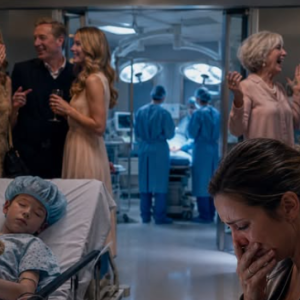
I saw his small hand reaching back for mine.
I heard his voice.
“Everyone else too, right?”
That sentence stayed inside my head like a wound that refused to close.
Oliver was recovering well physically.
The doctors were amazed by how quickly his body responded.
His heart rhythm was strong.
His oxygen levels were improving.
Every medical update should have made me feel like the luckiest mother alive.
And I was.
But there was another pain sitting beside the happiness.
The pain of realizing my son had learned something no seven-year-old should ever have to learn.
That sometimes the people who say “family” the loudest are the first ones to disappear when you actually need them.
On the third afternoon, while Oliver slept, my phone buzzed.
I expected a doctor.
Maybe a nurse.
Maybe even one of my family members finally asking if he was okay.
Instead, it was my mother.
Patricia Walsh.
I stared at her name for a long moment before opening the message.
I thought maybe she was going to apologize.
Maybe she was going to say:
“I’m sorry, Jennifer.
We failed you.”
Maybe she was going to ask how Oliver was feeling.
Maybe she was going to admit that a wedding appointment was not more important than a child’s heart surgery.
But the message on my screen was not an apology.
It wasn’t concern.
It wasn’t love.
It was a request.
“Jennifer, I need you to send $5,000 for Diane’s wedding dress deposit.
The designer needs payment today.
Your sister has dreamed about this dress her whole life.
Please don’t make this difficult.”
I read it once.
Then again.
Then a third time.
My fingers went cold.
Across the room, Oliver moved slightly in his sleep.
His little hand rested over the blanket where his chest had been opened and repaired.
Three days earlier, my child had been lying on an operating table while I sat alone under hospital lights, holding his astronaut bear and pretending I wasn’t falling apart.
And now my mother wanted money for a dress.
Not medicine.
Not a meal.
Not help with hospital bills.
A dress.
I didn’t cry.
That surprised me.
A few months earlier, I would have cried.
I would have called my mother and asked why she didn’t love us enough.
I would have explained, begged, and tried to make her understand.
But something inside me had changed in that waiting room.
I had spent years trying to convince people to choose me.
I had spent years shrinking my pain so other people could stay comfortable.
But watching my son look toward an empty doorway after surgery changed something permanent inside me.
I opened my banking app.
My mother thought she still had access because, years ago, when my father lost his job, I had helped my parents financially.
I had added accounts, shared information, and trusted them because they were my family.
I had never imagined I would need to protect myself from them.
I transferred exactly fifty cenTS.
The message box appeared.
I typed:
“Buy a veil.”
Then I pressed send.
For a few seconds, I stared at the screen.
Not because I regretted it.
Because I couldn’t believe it had come to this.
A few minutes later, my phone exploded.
First my mother.
Then Diane.
Then Marcus.
Then my father.
The family group chat, which had been silent during my son’s surgery, suddenly became very active.
“Are you serious right now?”
“Is this some kind of joke?”
“You embarrassed Diane during the most important week of her life.”
“You’re being cruel.”
“You always overreact.”
I looked at those words while sitting next to my recovering son.
Not one message said:
“How is Oliver?”
Not one said:
“Is he okay?”
Not one said:
“We’re sorry.”
I locked my phone.
Then I opened the bank app again.
My hands were steady.
I froze every shared account.
I removed access.
I changed passwords.
I canceled every automatic payment connected to my family.
Years of financial help.
Years of covering emergencies.
Years of being the person everyone called when they needed something.
It ended in ten minutes.
The next morning, while Oliver was eating breakfast from his hospital tray, my phone rang.
Unknown number.
Normally, I wouldn’t answer.
But something made me pick up.
“Is this Jennifer Walsh?”
“Yes.”
“This is Daniel from the bank.”
My heart tightened.
“Is there a problem?”
There was a pause.
“Actually, I’m calling because we noticed unusual activity regarding your accounTS. Several access permissions were removed yesterday, and I wanted to confirm whether those changes were authorized.”
I looked at Oliver.
He was carefully arranging his fruit pieces into little shapes, completely unaware of the storm happening around us.
“Yes,” I said quietly.
“They were authorized.”
Another pause.
“Jennifer, I need to ask.
Are you sure?”
The question irritated me.
Not because of him.
Because for years everyone had asked me if I was sure whenever I protected myself.
Are you sure you want to say no?
Are you sure you want boundaries?
Are you sure family should have consequences?
I looked at my son.
The little boy who had gone into surgery believing his whole family would be waiting.
“Yes,” I said.
“I’m sure.”
After I hung up, Oliver looked up.
“Mom?”
“Yeah, buddy?”
“Are Grandma and Grandpa coming today?”
The question hurt.
But this time, I didn’t lie.
I sat beside him and took his hand.
“No, sweetheart.”
His face changed.
Not angry.
 He Loaned His Brother Money For Surgery, Then Discovered They Were Chasing Charity Funds Anyway
Just disappointed.
The kind of disappointment that only comes when you finally understand something.
“Did they forget?”
I swallowed.
“No.”
“Then why didn’t they come?”
I looked at my son’s innocent face.
And I realized he deserved the truth.
Not every painful truth.
But an honest one.
“Sometimes,” I said slowly, “some people make choices that hurt us.
And sometimes those choices tell us who they really are.”
Oliver was quiet.
Then he looked down at his astronaut bear.
“Is it because I was sick?”
My heart broke.
“No.”
I pulled him into my arms carefully.
“Never.
Never think that.”
I held him as gently as possible because of his incision.
“You are not hard to love.
You are not a burden.
You are not less important than anything.”
His eyes filled with tears.
“Then why didn’t they come?”
I kissed his forehead.
“Because they made the wrong choice.”
That afternoon, something unexpected happened.
The hospital room door opened.
I looked up, expecting another nurse.
Instead, I saw my father standing there.
Robert Walsh.
He looked older than I remembered.
Tired.
Ashamed.
For a second, I felt the old version of myself rise up.
The little girl who wanted her father’s approval.
The daughter who wanted him to say he was proud.
But then I looked at Oliver.
And I remembered who needed me now.
Not my past.
My present.
My father slowly stepped inside.
“Jennifer…”
I said nothing.
He looked at Oliver.
“I wanted to see him.”
Oliver stared at him.
“You weren’t there.”
My father flinched.
Children have a way of saying what adults spend years avoiding.
“I know,” he whispered.
“You promised.”
“I know.”
“Mom promised too.”
My father looked down.
“I know.”
The silence was heavy.
Finally, he said the words I had waited years to hear.
“I was wrong.”
I didn’t answer immediately.
Because an apology is powerful.
But an apology does not erase an absence.
“I’m sorry, Jennifer,” he continued.
“I thought there would always be another chance to show up.”
My eyes burned.
“There almost wasn’t.”
He closed his eyes.
That sentence hurt him.
Good.
Not because I wanted him to suffer.
But because some people only understand pain when they finally feel the weight of what they caused.
“I can’t fix what happened,” he said.
“No,” I replied softly.
“You can’t.”
He nodded.
“I understand.”
Then he placed the astronaut bear beside Oliver.
“I brought this for him.”
Oliver looked at the bear.
The same bear my father promised to bring.
The same bear I packed myself because I stopped trusting promises.
“Thank you,” Oliver whispered.
My father left a few minutes later.
He didn’t ask for forgiveness.
He didn’t ask me to forget.
And somehow, that was the first honest thing he had done in a long time.
Weeks passed.
Oliver returned home.
He went back to school.
He started laughing again.
His scar became something he was proud of instead of something he feared.
One evening, while we sat outside watching the sunset, Oliver touched the small scar on his chest.
“Mom?”
“Yeah?”
“Do I look different now?”
I smiled.
“A little.”
“Is that bad?”
I shook my head.
“No, buddy.
It means your heart fought hard.”
He smiled.
“My heart is strong?”
“The strongest I know.”
He leaned against me.
“Mom?”
“Yes?”
“Thank you for staying.”
I closed my eyes.
Because that was the sentence I needed more than any apology from my family.
Not “I’m sorry.”
Not “We should have been there.”
Just my son knowing one thing.
I stayed.
Years later, I would still remember that hospital room.
The bright lighTS.
The empty chairs.
The silent phone.
But I would also remember something else.
That was the day I stopped chasing people who only loved me when I was useful.
That was the day I learned family is not measured by last names.
It is measured by who walks through the door when your child is scared.
Who holds your hand when the world feels impossible.
Who stays.
And when I looked at Oliver, healthy and smiling, I knew the truth.
I had lost the family I thought I had.
But I had protected the one person who mattered most.
My son.
My heart.
My reason to keep going.